
Espresso
Best Espresso Grinders for Home (2026)
Your espresso machine is only as good as your grinder. Six grinders ranked for home espresso — Eureka, Baratza, DF64, and when to spend more.
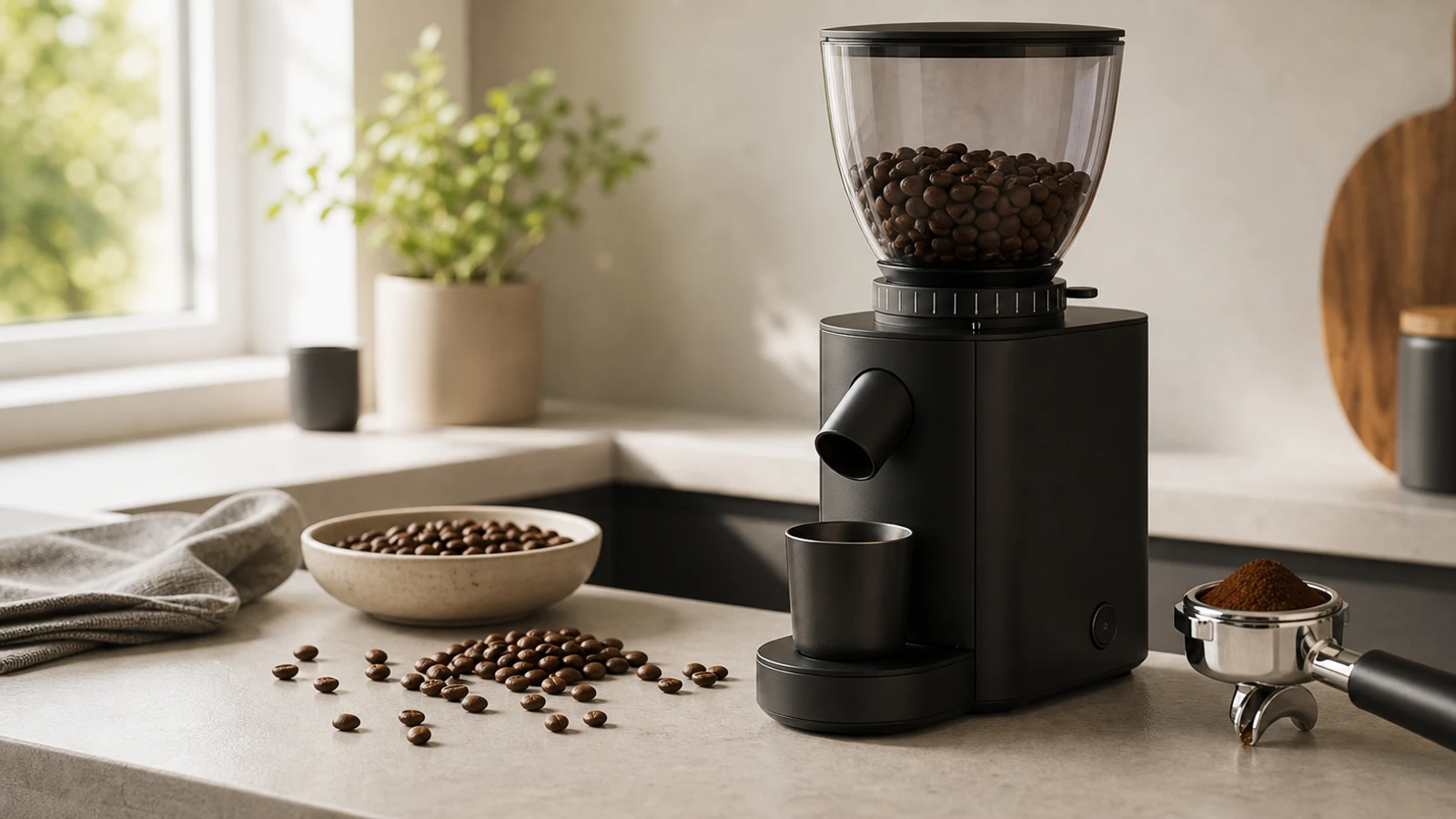
The harsh truth: a $200 grinder paired with a $700 espresso machine produces worse shots than a $500 grinder paired with a $300 machine. Grind consistency controls extraction far more than machine quality does. Once you accept this, buying espresso gear makes more sense.
Six grinders worth your money for home espresso in 2026.
Why grinder matters more than machine
Espresso is 94% water and 6% dissolved solids. The grinder controls how much surface area the water contacts and how uniformly. This affects:
- Extraction evenness — uniform grind = uniform extraction
- Flow rate — too fine, water can’t flow; too coarse, water rushes
- Channel formation — inconsistent grind creates “channels” where water shortcuts
- Aroma retention — fresh-ground coffee loses aroma in 15–30 minutes
The best espresso machine in the world, paired with a bad grinder, produces bad espresso. A mediocre machine with a good grinder produces good espresso.
Budget rule: spend at least 40% of your total setup on the grinder. If your machine is $700, aim for a $300+ grinder. If your machine is $1,500, grinder should be $600+.
What to look for
Burr type
Conical burrs: coffee falls through cone-shaped grinding chamber. More forgiving, cooler operation, lower retention. Niche Zero is flagship.
Flat burrs: coffee crushed between two flat disks. Clearer flavor separation, more “clarity” in the cup. Eureka, DF64 are flagships.
For espresso specifically, both work. Flat burrs produce slightly more “light” and acidic cups; conical produces slightly more body. Preference.
Burr size
- 55mm and up = espresso-capable with good grind distribution
- 50–55mm = espresso-adequate
- Under 50mm = avoid for espresso; pour-over only
Retention
The grams of ground coffee trapped in the grinder after grinding. High retention (5+ g) means stale grounds mix with fresh on your next dose. Zero-retention grinders (Niche Zero, DF64 with proper use) eliminate this.
Adjustment method
Stepless = infinite adjustment, dial gradually. More precise, takes longer to dial.
Stepped = click-by-click adjustment. Faster workflow, less precision.
For espresso, stepless is the answer. Small grind differences matter.
Motor
Direct-drive motors are simpler, longer-lasting. Planetary gear motors are smoother but failure-prone over 10+ years.
Top picks ranked
1. Eureka Mignon Specialita — best overall home espresso grinder
Score: 9.4 / 10 · Price: ~$500
The Mignon Specialita is the de facto standard recommendation for home espresso, and it’s earned the spot. 55mm flat burrs, stepless adjustment, silent operation (under 65 dB), and Italian build quality. The entire grinder disappears into your kitchen aesthetic while doing everything an espresso grinder should.
Most home-barista communities rank the Specialita as the single best investment in the $400–$600 range. Retention is low (not zero, but manageable at ~1 g).
Where it falls short: still has some retention; 55mm burrs are adequate not exceptional.
Best for: most home espresso users; quiet-kitchen households.
2. DF64 — best budget grinder for real espresso
Score: 9.2 / 10 · Price: ~$350
The DF64 is a Chinese direct-to-consumer grinder that ships 64mm flat burrs — a spec that typically costs $800+ in premium brands. At $350, it’s a disruption at the budget tier.
Zero retention with proper workflow (single-dose, airflow). Stepless adjustment. Multiple burr upgrade options (SSP, Mazzer) for users who want to push further. Build quality is good for the price, not premium.
Community consensus: DF64 is what the Niche Zero was five years ago — a grinder at a lower price tier than its specs suggest.
Where it falls short: plastic housing feels cheap; louder than Eureka; smaller user base / less support.
Best for: value-maximizing users; enthusiasts willing to work for perfect workflow.
3. Baratza Sette 270Wi — best starter espresso grinder
Score: 8.9 / 10 · Price: ~$500
The Sette 270Wi is uniquely designed for espresso — the burrs rotate around the coffee, not the other way around, eliminating most retention and producing very uniform particles. The Wi version adds programmable weight-based dosing.
Baratza’s US-based customer service is legendary; every grinder they sell has a parts-replacement pipeline. For a first serious grinder, the service factor alone justifies picking Baratza.
Where it falls short: louder than Eureka; the distinct Sette form factor doesn’t match every kitchen aesthetic.
Best for: first-time espresso grinder buyers; service-conscious users.
4. Niche Zero — best premium under $1,000
Score: 9.1 / 10 · Price: ~$700
The Niche Zero became a cult favorite because it delivers commercial- quality at home. Zero retention (actually zero — patented design), conical burrs with exceptional shot quality, stepless adjust, compact footprint, and aesthetic that matches any kitchen.
For a user who wants to buy once and be done, the Niche Zero is the answer. Lifetime value is exceptional: durable, repairable, high resale value.
Where it falls short: at the upper price tier; conical (not flat) burrs are a philosophical preference; newer users may find the manual workflow slower.
Best for: long-term buyers; minimalist kitchens; users who want one grinder forever.
5. Baratza Virtuoso+ — best all-rounder (espresso + pour-over)
Score: 8.6 / 10 · Price: ~$300
The Virtuoso+ isn’t a dedicated espresso grinder, but it’s the best single grinder for someone who drinks both espresso and pour-over. 40-step adjustment covers everything from Turkish fine to French press coarse. Espresso is on the coarser/less consistent side of acceptable, but it works.
If you’ll change brew methods frequently, the Virtuoso+ saves you from buying two grinders. Baratza’s service still applies.
Where it falls short: espresso-specific performance below dedicated espresso grinders; stepped (not stepless) adjust.
Best for: multi-method coffee drinkers; single-grinder households.
6. Fellow Opus — best design-focused
Score: 8.3 / 10 · Price: ~$200
Fellow’s Opus is a beautiful, Apple-styled grinder that covers espresso adequately. 40mm burrs are smaller than ideal for espresso, but the overall build and aesthetics are exceptional.
Include here mostly as “the grinder for people who care about kitchen design.” Espresso grind quality is the weakest on this list — if you’re serious about shots, skip. If you’re starting casual and want something beautiful, it’s legitimate.
Where it falls short: 40mm burrs limit espresso quality; proprietary design limits accessories.
Best for: design-first buyers; casual espresso drinkers.
Grinder size for espresso: a simple rule
- Home, 1–4 shots/day: 55mm flat or comparable conical. Eureka Mignon, DF64, Sette, Niche are all in range.
- Home, 5–10 shots/day: 64mm flat. DF64 with upgraded burrs, or Mazzer prosumer.
- Busy home / prosumer: 64mm+ burrs, programmable dosing. Eureka Atom 75, Mazzer Mini Electronic.
Going below 55mm for espresso-serious users is a step down. Going above 64mm for home users is mostly diminishing returns.
Common mistakes when buying grinders
-
Over-weighting the machine, under-weighting the grinder. Your $1,000 machine with a $150 grinder produces worse espresso than your $500 machine with a $400 grinder.
-
Buying a pour-over grinder for espresso. Grinders optimized for coarse-to-medium grinds (Baratza Encore, Fellow Ode) make terrible espresso regardless of price.
-
Skipping the grinder to save money. A bad grinder is the biggest drag on cup quality. Better to have a great grinder with a cheaper machine.
-
Using pre-ground coffee. No grinder makes up for staleness. Pre-ground loses aroma within 30 minutes.
Frequently asked questions
- What's the best espresso grinder for home under $500?
- The Eureka Mignon Specialita at ~$500 is the broad consensus best-in-class home espresso grinder. The DF64 at ~$350 is the value choice with 64mm burrs at a lower price. Either produces excellent espresso grounds.
- Do I need a separate grinder from my espresso machine?
- Strongly recommended. Integrated grinders on machines (Breville Barista Pro, etc.) are adequate but ceiling-limited. A standalone $400+ grinder produces measurably better, more adjustable grinds. If you're serious about espresso, separate the components.
- Conical vs flat burrs for espresso?
- Both work. Flat burrs (Eureka, DF64) produce slightly more 'light' and acidic cups with clearer flavor separation. Conical burrs (Niche Zero) produce more body and mouthfeel. Personal preference. The consistency at a given burr quality matters far more than the burr geometry.
- How important is grinder retention?
- Very. High-retention grinders (5+g trapped) mix stale grounds from previous doses with fresh grinds. Every cup tastes of yesterday. Zero-retention grinders (Niche Zero, DF64 with proper workflow) eliminate this. For an espresso obsessive, retention matters more than almost any other spec.
- Is a manual grinder good for espresso?
- For single cups, yes — hand grinders like the 1Zpresso J-Max or Kingrinder K6 produce excellent espresso grinds. But 30+ seconds of hand grinding per shot becomes tedious for 2+ cups/day. Electric grinders dominate regular home use.
- How long should an espresso grinder last?
- 15+ years with quality brands (Eureka, Baratza, Niche). Burrs themselves last 500–1000 lbs of coffee — for a home user, that's 5–10 years before replacement ($50–$100 for new burrs). Total ownership 15+ years is realistic.
Sources and further reading
- Eureka Grinders Official
- Niche Coffee Zero
- Home-Barista Grinder Reviews
- Prima Coffee Grinder Comparison
- Related: Best Espresso Machines Under $1,000
Last updated May 21, 2026. See our editorial policy for methodology.
The Signal Brief
One useful dispatch each week.
One sharp take, three things worth reading, and the week's buying signals.