
Espresso
How to Dial In Espresso: A Real Beginner's Guide (2026)
Dialing in espresso means tuning grind, dose, and yield until your shots taste right. Here's the practical method — no mystery, no guesswork.
“Dialing in” is the process of adjusting your grind, dose, and yield until your espresso tastes right. It sounds mysterious. It’s not. This guide walks through the method home baristas actually use, in the order they use it.
The three variables
You control three things:
- Grind size — how fine you grind the beans
- Dose — how much coffee you put in the portafilter (grams)
- Yield — how much espresso comes out (grams)
Everything else (machine temp, water, pump pressure) is fixed at home unless you’re deep into modifications.
Ratio = yield ÷ dose. Target is 1:2 for most modern espresso. Example: 18g in, 36g out = 1:2 ratio.
Equipment you need before dialing in
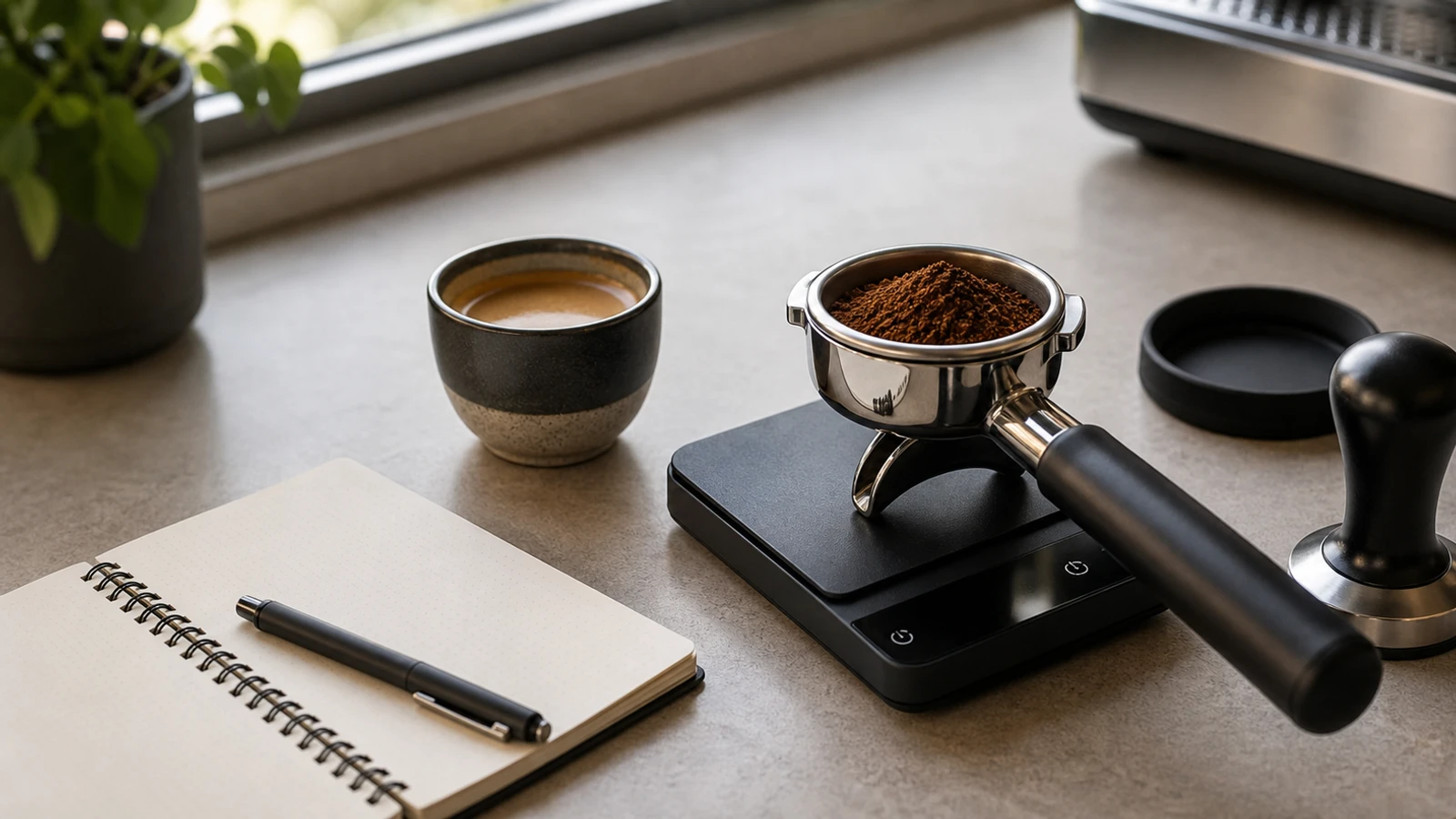
- A digital scale accurate to 0.1g (under $20 on Amazon)
- A bottomless (naked) portafilter (optional but helps diagnosis)
- A consistent tamping tool
- Fresh coffee beans (roasted within 4 weeks, rested at least 5 days)
- Patience for 3–5 bad shots
Without a scale, dialing in is guesswork. Buy one first.
The dialing-in process, step by step
Step 1: Set your starting point
- Dose: 18g (for 58mm double basket) or the basket’s “dose rating”
- Grind: start at the middle of your grinder’s espresso range
- Temperature: default machine temp
- Time target: 25–30 seconds
Put your portafilter on the scale, zero out, add 18g of beans, grind, tamp evenly, lock into machine, place a cup on the scale, zero out, pump until scale reads 36g, stop.
Note: how long did it take?
Step 2: Diagnose the first shot
If the shot took under 20 seconds (gushing, fast flow): → Grind is too coarse. Go finer.
If the shot took over 35 seconds (slow, thick): → Grind is too fine. Go coarser.
If the shot took 25–32 seconds: → Timing is in range. Now taste.
Step 3: Taste test
- Sour / thin / watery: under-extracted. Grind finer, OR increase dose, OR both.
- Bitter / burnt / harsh: over-extracted. Grind coarser, OR decrease dose, OR both.
- Balanced / sweet / rich: you’ve dialed in. Save these settings.
Step 4: Iterate
After each adjustment, pull another shot. Keep notes: grind setting, dose, yield, time, taste.
Most dial-in sessions take 3–5 shots. If you’re at 10+ shots and still bad, something else is wrong (see troubleshooting below).
The taste-first approach
The numbers (25–32 seconds, 1:2 ratio) are guidelines, not rules. Some beans taste best at 1:2.5. Some at 1:1.8. Some at 22 seconds, some at 35.
Trust your taste over the metric. If a shot tastes great but took 24 seconds, that’s a great shot. If a shot tastes flat but hits 30 seconds perfectly, adjust anyway.
Troubleshooting by symptom
Shots are inconsistent — sometimes fast, sometimes slow
Cause: inconsistent dose, inconsistent tamp, or beans with high variance.
Fix: weigh every shot. Tamp with consistent pressure (30 lbs is a common reference). Make sure portafilter is clean.
Shots gush no matter how fine I go
Cause: channeling. Water finds a shortcut through the puck.
Fix: distribute grounds evenly before tamping. Use a WDT (weiss distribution technique) tool — a fine needle to stir grounds. Tamp level.
Shots choke (nothing comes out)
Cause: grind way too fine, or dose way too high, or clogged portafilter.
Fix: coarsen grind by 2–3 settings. Reduce dose by 1g. Clean the portafilter basket.
Shot tastes OK but crema is thin
Cause: stale beans, poor extraction, or low brew temperature.
Fix: use fresher beans (7–14 days from roast is peak). Check brew temp on machine (should be 200°F/93°C).
First shot of the morning tastes worst
Cause: machine is cold. Group head and portafilter need to heat up.
Fix: flush 1–2 blank shots through the group head before pulling your first real shot. Some machines need 10–15 min of idle warmup.
The ratio nuance
1:1.5 (ristretto) — stronger, sweeter, more intense. 18g → 27g. 1:2 (standard) — balanced, broadly optimal. 18g → 36g. 1:2.5–3 (lungo) — lighter, more drinkable, sometimes bitter. 18g → 45–54g.
Modern third-wave coffee typically tastes best at 1:2 to 1:2.5. Older Italian-style espresso at 1:1.5. Start at 1:2 and adjust based on bean origin and your taste.
Milk drink dial-in is different
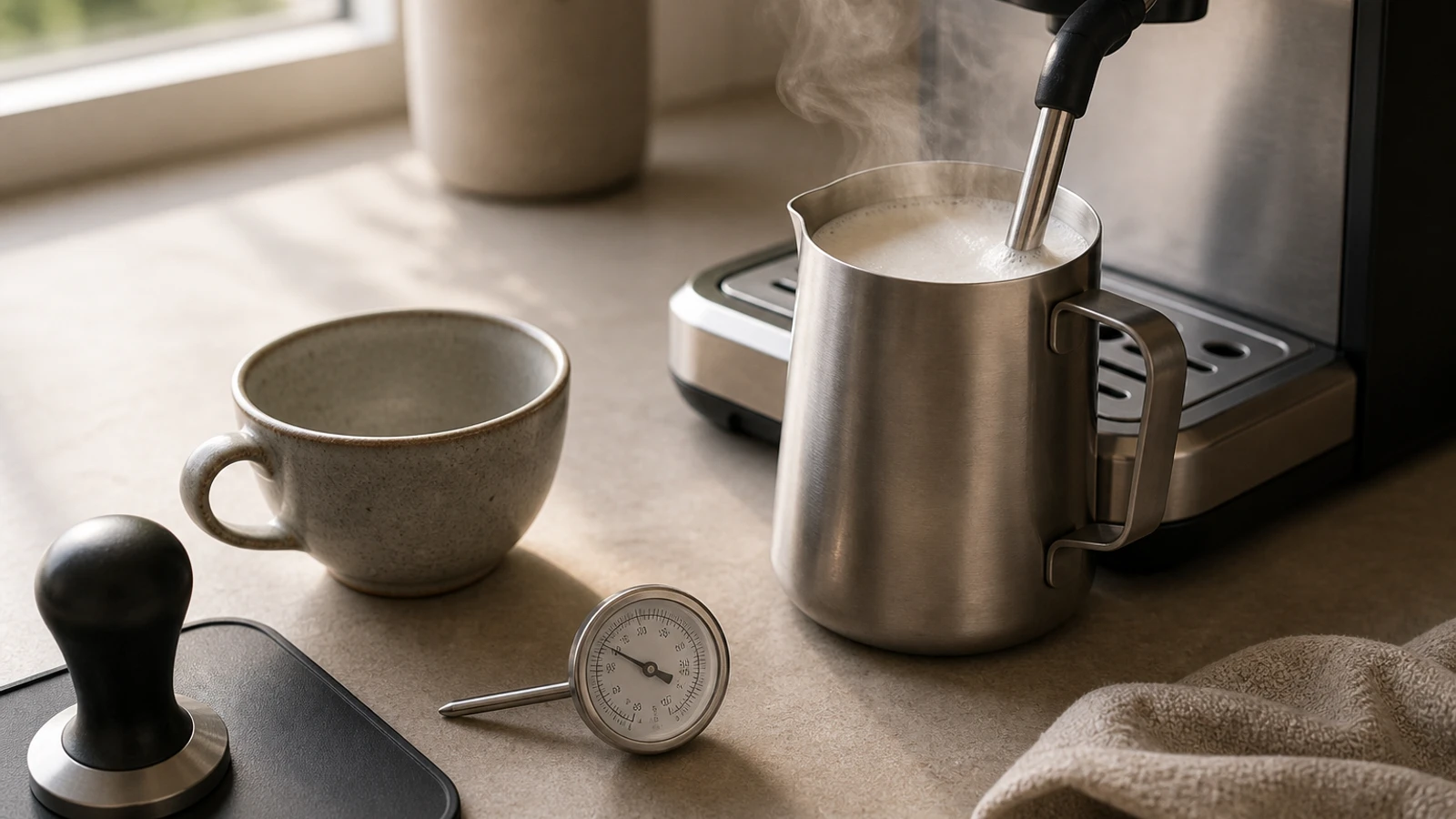
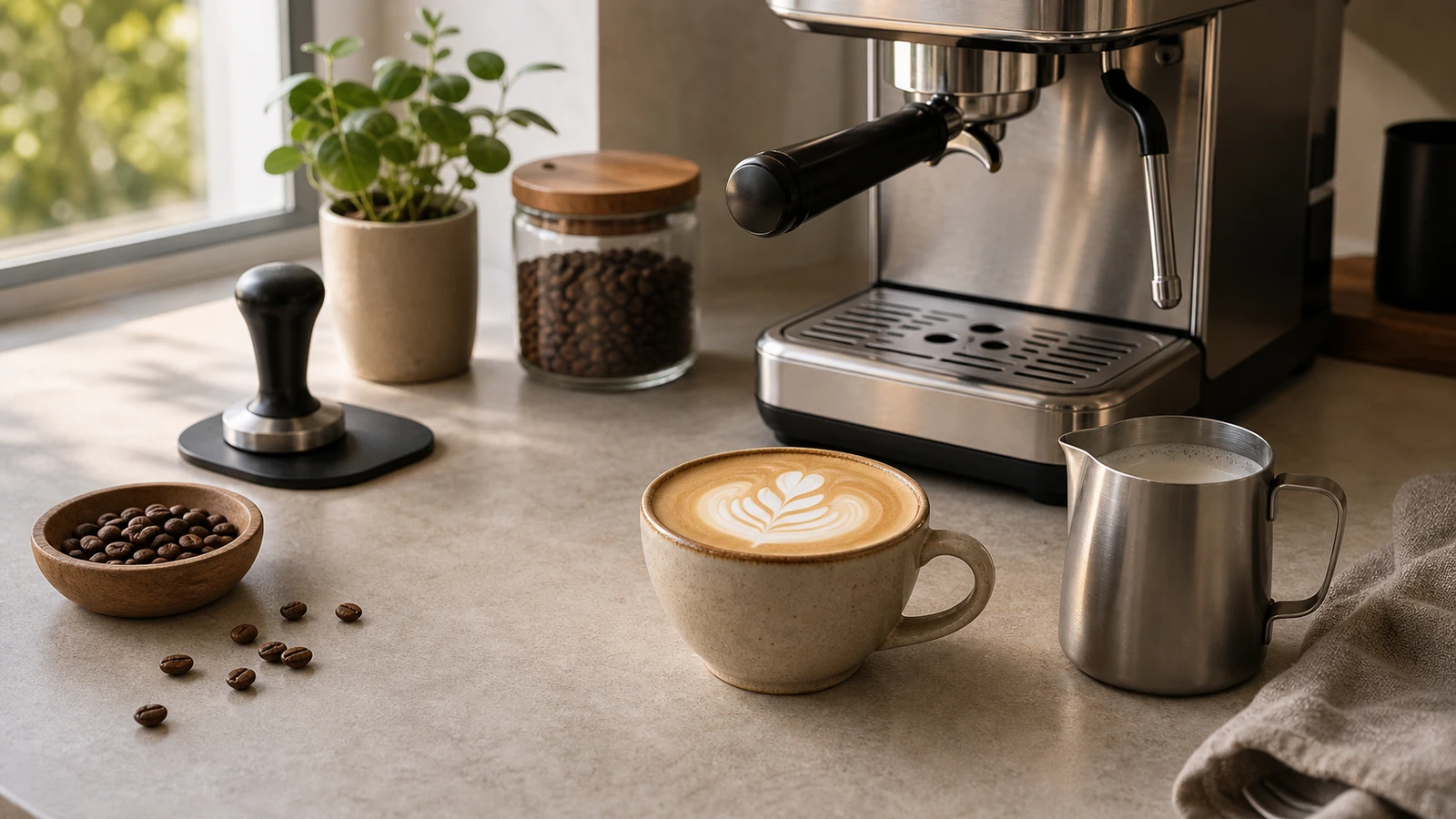
If you’re making cappuccinos, lattes, or flat whites, the espresso’s sweetness and body matter more than its pure shot quality. You can “get away with” slightly over-extracted shots because milk mellows harshness. Conversely, under-extracted shots taste weak when milked.
Rule of thumb for milk drinks: pull shots that taste slightly bold / on the stronger side of balanced, then balance with milk.
When to stop dialing in
Once you’ve found a combination that produces consistent, tasty shots:
- Write down the settings (grind #, dose, yield, time)
- Stick with those settings for at least a week
- Make small adjustments only when switching beans or feeling experimental
Chasing perfection shot-by-shot becomes a time sink. Consistency beats optimization.
Frequently asked questions
- What does dialing in espresso mean?
- Adjusting grind size, dose (input coffee weight), and yield (output espresso weight) until your shots produce balanced, tasty espresso. It's the bridge between having an espresso machine and consistently making good espresso.
- What ratio should I use for dialing in espresso?
- Start at 1:2 — e.g., 18g coffee in, 36g espresso out. This is the broadly accepted modern espresso standard. Adjust to 1:1.5 (ristretto) for stronger shots or 1:2.5 for lighter shots. Let taste guide final adjustment.
- How long should a dial-in session take?
- 3–5 shots for most home users switching to a new bag of beans. Longer (10+ shots) if you're learning fundamentals or switching from different brew methods. Don't expect perfect shots on pull 1.
- Why does my espresso taste sour?
- Under-extraction. Water flowed through too fast, not enough coffee dissolved. Fix: grind finer, increase dose slightly, or increase shot time. If sourness persists, check brew temperature (should be 200°F/93°C).
- Why does my espresso taste bitter?
- Over-extraction. Water contacted grounds too long or too much dissolved. Fix: grind coarser, reduce dose, or reduce yield. If bitterness persists despite corrections, check beans — over-roasted beans taste bitter regardless of extraction.
- Do I need a scale to dial in espresso?
- Strongly recommended. Without measuring dose (input) and yield (output), every shot is guesswork and can't be replicated. A $15 kitchen scale accurate to 0.1g is the single highest-ROI espresso accessory.
Sources and further reading
- James Hoffmann: The Espresso Guide
- Clive Coffee: Dialing In Guide
- Home-Barista: Dial-In Process
- Barista Hustle: Extraction Fundamentals
- Related: Best Espresso Machines Under $1,000 · Best Espresso Grinders
Last updated May 22, 2026. See our editorial policy for methodology.
The Signal Brief
One useful dispatch each week.
One sharp take, three things worth reading, and the week's buying signals.