
Smart Home
Smart Bulb vs Smart Switch: Which Should You Buy?
A practical comparison of smart bulbs, smart switches, dimmers, hubs, Matter support, rental limits, and when simple LED bulbs are better.
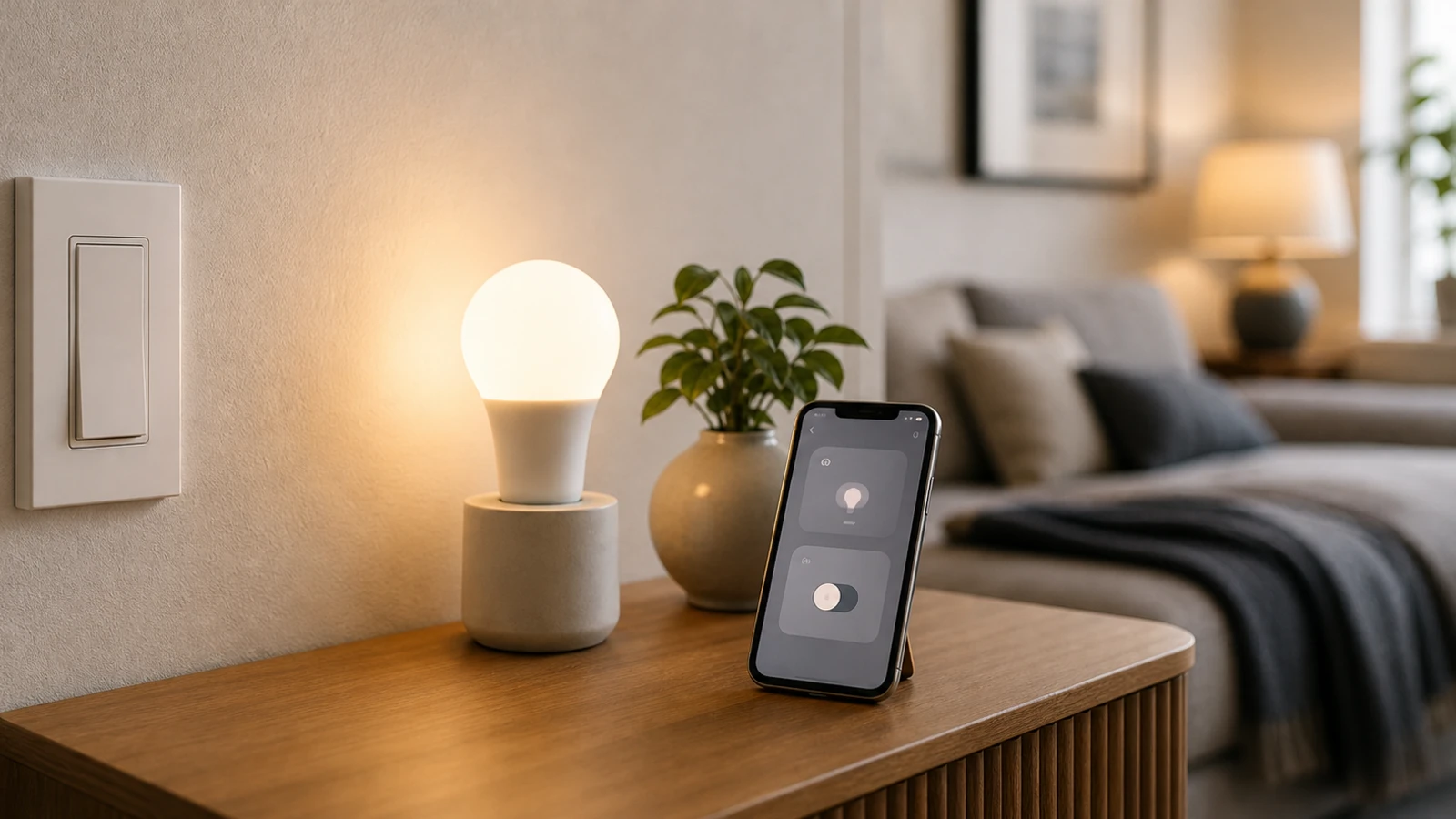
Smart lighting can be useful, but it is easy to buy the wrong layer. A smart bulb changes the bulb. A smart switch changes the wall control. A smart plug may be enough for a lamp. Sometimes the best answer is no smart lighting at all.
Start with the behavior you want, then choose the hardware.
The core difference
| Option | Best for | Main drawback |
|---|---|---|
| Smart bulb | Lamps, color scenes, renters, single fixtures | Wall switch can cut power and make it unreachable |
| Smart switch | Ceiling fixtures, rooms, family-friendly control | May require neutral wire, wiring work, and compatibility checks |
| Smart dimmer | Dimming a whole fixture from the wall | Must match bulb type and load |
| Smart plug | Floor lamps and simple on/off automation | Usually no color or bulb-level dimming |
Choose a smart bulb when
Smart bulbs make sense when you want:
- Color or tunable white.
- App or voice control for one lamp.
- A renter-friendly setup.
- No wall wiring work.
- Per-bulb scenes in a room.
- Easy removal when you move.
The main problem is the physical wall switch. If someone turns the switch off, the smart bulb loses power and may stop responding. Smart bulbs work best in lamps or fixtures where people will not constantly use a traditional wall switch.
Choose a smart switch when
Smart switches make sense when you want:
- One normal wall control for a whole room.
- Automation without retraining everyone in the house.
- Ceiling fixtures to stay controllable even when someone presses the switch.
- A cleaner setup than multiple smart bulbs.
The main problem is installation. Some smart switches need a neutral wire. Some do not work well with certain fixtures or bulbs. Dimmers must be compatible with dimmable LED bulbs and the fixture load.
Choose a smart plug when
A smart plug is often the simplest choice for:
- Floor lamps.
- Holiday lights.
- A bedside lamp that only needs on/off automation.
- Temporary schedules.
It is not the right choice for hardwired fixtures or places where a plug would be overloaded, blocked, or unsafe.
Matter helps compatibility, but it is not magic
Matter is an IP-based smart home standard from the Connectivity Standards Alliance designed to improve interoperability across smart home ecosystems. That can make shopping less confusing, especially for light bulbs, switches, plugs, and controls.
Still check the real requirements:
- Does it need Wi-Fi, Thread, Bluetooth, or a hub?
- Does your phone or smart speaker act as the needed controller?
- Does the product support the exact feature you care about, such as dimming, color temperature, or adaptive lighting?
- Does it work with your fixtures, bulbs, and wiring?
The Matter logo is useful, but it does not replace reading the product requirements.
Dimming is where mistakes happen
Do not assume any dimmer works with any LED bulb. ENERGY STAR guidance tells shoppers to look for bulbs marked dimmable when using a dimmer, and to check compatibility with electronic controls such as photocells, motion sensors, or timers.
Watch for:
- Flicker.
- Buzzing.
- Lights that never fully turn off.
- Very small dimming range.
- Bulbs that reset after power loss.
If dimming matters, buy one bulb or one switch first and test before replacing the whole room.
The practical buying path
- Name the control problem. Do you need color, dimming, schedules, voice control, or just a better switch?
- Decide who uses the room. Guest rooms and shared living rooms need normal controls more than clever automations.
- Check the fixture. Enclosed fixture, ceiling fan, multi-bulb fixture, low-voltage lighting, and old dimmers all change the answer.
- Check wiring before buying switches. Neutral wire and box depth matter.
- Buy one first. Test app setup, response time, dimming, and family use.
When simple LED bulbs are better
Skip smart lighting when:
- The room only needs a better Kelvin or lumen choice.
- The switch location is already convenient.
- Guests or family members dislike app-controlled lights.
- The fixture is old, enclosed, or compatibility is unclear.
- You are trying to solve glare or poor placement.
A regular dimmable LED bulb and a better lamp can fix many lighting problems with less maintenance.
Sources and further reading
- DOE: LED Lighting
- ENERGY STAR Bulb Purchasing Guide
- Connectivity Standards Alliance: Matter announcement
- CPSC Home Electrical Safety Checklist
Frequently asked questions
- Are smart bulbs better than smart switches?
- Neither is always better. Smart bulbs are easier and better for lamps, color, and renters. Smart switches are usually better when one wall control should manage a whole ceiling fixture or room.
- Do smart switches need a neutral wire?
- Many smart switches do, but not all. Check the product requirements and your switch box before buying. If you are unsure, use a qualified electrician.
- Is Matter required for smart lighting?
- No, but Matter can help compatibility across ecosystems. You still need to check controller, hub, protocol, dimming, and feature requirements before buying.
Last updated May 11, 2026. See our editorial policy for methodology and corrections.
The Signal Brief
One useful dispatch each week.
One sharp take, three things worth reading, and the week's buying signals.