
Smart Home
Smart Thermostat Room Sensor Guide: When They Help
Room sensors can improve comfort in some homes, but they do not fix poor HVAC sizing, blocked vents, or unrealistic schedules.
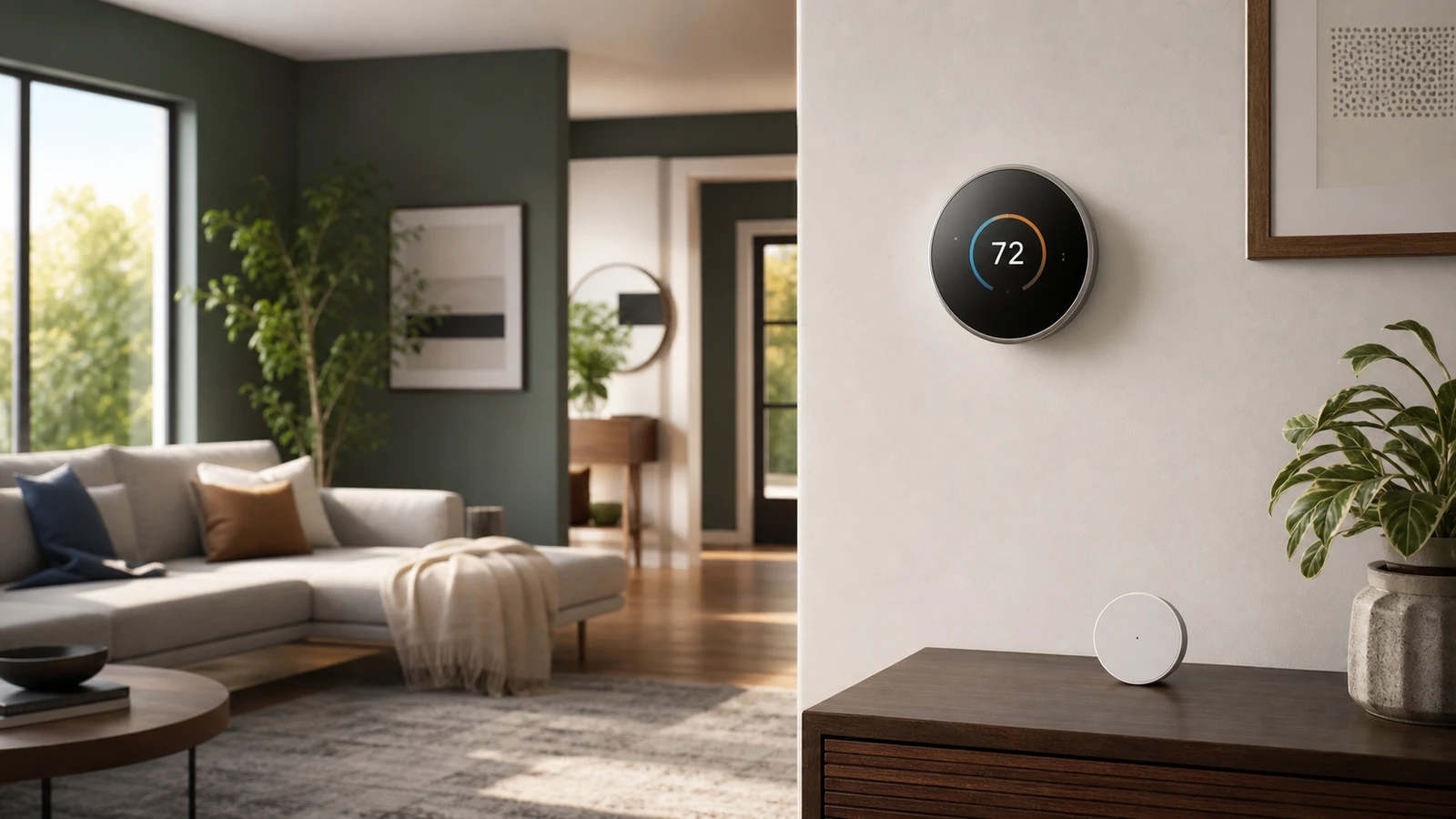
Smart thermostat room sensors can help when one hallway thermostat does not represent where people actually spend time. A bedroom may run warm, a home office may be cold, or afternoon sun may distort the main thermostat reading.
The right expectation is important: room sensors can help a thermostat make better decisions. They cannot resize ducts, repair insulation, or make one HVAC zone behave like several independent zones.
What room sensors measure
Depending on the system, a room sensor may measure:
- Temperature.
- Occupancy or motion.
- Humidity.
- Whether a room should be prioritized.
The thermostat may average sensors, prioritize occupied rooms, or follow a schedule that changes which rooms matter.
Where sensors help most
Good candidates include:
- A bedroom that is uncomfortable at night.
- A home office used during work hours.
- A living room with large windows.
- A hallway thermostat far from occupied rooms.
- Multi-story homes with predictable comfort gaps.
Sensors are strongest when household routines are predictable.
Where sensors disappoint
Sensors are less likely to help when:
- The HVAC system is poorly sized.
- Ducts are leaking or blocked.
- Registers are closed in ways the system was not designed for.
- Insulation or windows cause major heat gain or loss.
- The thermostat is asked to satisfy rooms with opposite needs.
If a room is always uncomfortable, a sensor may reveal the problem without solving it.
Placement rules
Place sensors away from:
- Direct sun.
- Supply vents.
- Drafty windows or doors.
- TVs, lamps, and electronics that add heat.
- Shelves where air does not circulate.
Use them at roughly the height where people occupy the room. For a bedroom, that may be near nightstand height; for an office, closer to desk height may make more sense.
How to decide if you need sensors
Use a one-week comfort log before buying. Write down the room, time, outdoor conditions, and what felt wrong. If the same room is uncomfortable at the same time every day, a sensor may help the thermostat prioritize that room. If the problem jumps around randomly, the cause may be airflow, insulation, sunlight, or user expectations instead.
Room sensors are strongest when the thermostat is in a poor representative spot, such as a hallway with little occupancy or a wall affected by sun. They are weaker when the HVAC system itself cannot deliver enough conditioned air to the problem room.
Scheduling examples
A bedroom sensor may matter most from late evening through morning. A home office sensor may matter only on workdays. A living room sensor may matter during evening occupancy but not overnight. Matching the sensor schedule to real use keeps the thermostat from over-serving empty rooms.
Avoid averaging every sensor all day. Averaging can make the whole home less comfortable if one room is always hot and another is always cold.
What to check before blaming the thermostat
Before buying more sensors, check simple causes:
- blocked supply or return vents
- dirty filters
- closed doors that trap air
- large windows without shading
- attic, basement, or crawlspace air leaks
- furniture blocking airflow
- old thermostat placement near heat sources
Sensors can show the pattern, but they cannot fix those physical issues.
Privacy and household expectations
If sensors include occupancy detection, explain that to the household. Some people are comfortable with temperature-only sensors but not motion-like room presence. Use the least invasive setting that solves the comfort problem.
Bottom line
Room sensors are best used as comfort evidence and schedule inputs. They are not a substitute for airflow, insulation, or HVAC repair. Buy them when the problem is predictable and room-specific; call for help when the system itself cannot keep up.
Sources and further reading
- ENERGY STAR: Smart Thermostats
- Department of Energy: Thermostats
- Related: Smart Thermostat Settings Guide
Frequently asked questions
- Do room sensors save energy?
- They can support smarter schedules and occupied-room comfort, but savings depend on the home, system, climate, and settings.
- Can room sensors make each room a separate zone?
- Usually no. Most sensors guide one HVAC system; they do not create separate duct zones by themselves.
Last updated May 12, 2026. See our editorial policy for methodology and corrections.
The Signal Brief
One useful dispatch each week.
One sharp take, three things worth reading, and the week's buying signals.