
Espresso
Sour vs Bitter Espresso: How to Tell and Fix It
A practical troubleshooting guide for home espresso flavor: separate sour, bitter, hollow, and harsh shots, then fix one variable at a time.

Bad espresso is usually described with two words: sour or bitter. The hard part is that many shots are both. A channeling shot can taste sharp at the front and dry at the finish. A dark roast can taste bitter even when the extraction is short. A milk drink can hide the problem until the espresso is so far off that no amount of milk helps.
This guide separates the common flavors and gives you a fix order that does not require changing everything at once.
Sour vs bitter: the quick taste test
Use plain espresso, not a latte, for the first diagnosis.
| Flavor | What it feels like | Common cause | First fix |
|---|---|---|---|
| Sour | Sharp, lemony, thin, mouth-watering | Under-extraction | Grind finer or pull longer |
| Bitter | Dry, burnt, harsh, lingering | Over-extraction | Grind coarser or pull shorter |
| Hollow | Watery, empty middle, no sweetness | Weak extraction or stale beans | Check ratio and beans |
| Sour plus bitter | Sharp start, dry finish | Channeling or uneven extraction | Improve puck prep |
| Ashy | Burnt, smoky, flat | Roast level or dirty machine | Try different beans or clean |
If you are not sure which one you taste, let the espresso cool for a minute. Very hot espresso can make bitterness and sharpness harder to separate.
Why sour espresso happens
Sour espresso usually means the water did not dissolve enough of the sweet and balancing compounds from the coffee. The shot may have run too quickly, used water that was too cool, or passed through an uneven puck.
Most common signs:
- Shot reaches target yield in under 20 seconds
- Stream is pale and fast early in the shot
- Crema looks thin and disappears quickly
- Cup tastes sharp, thin, and unfinished
Fix in this order:
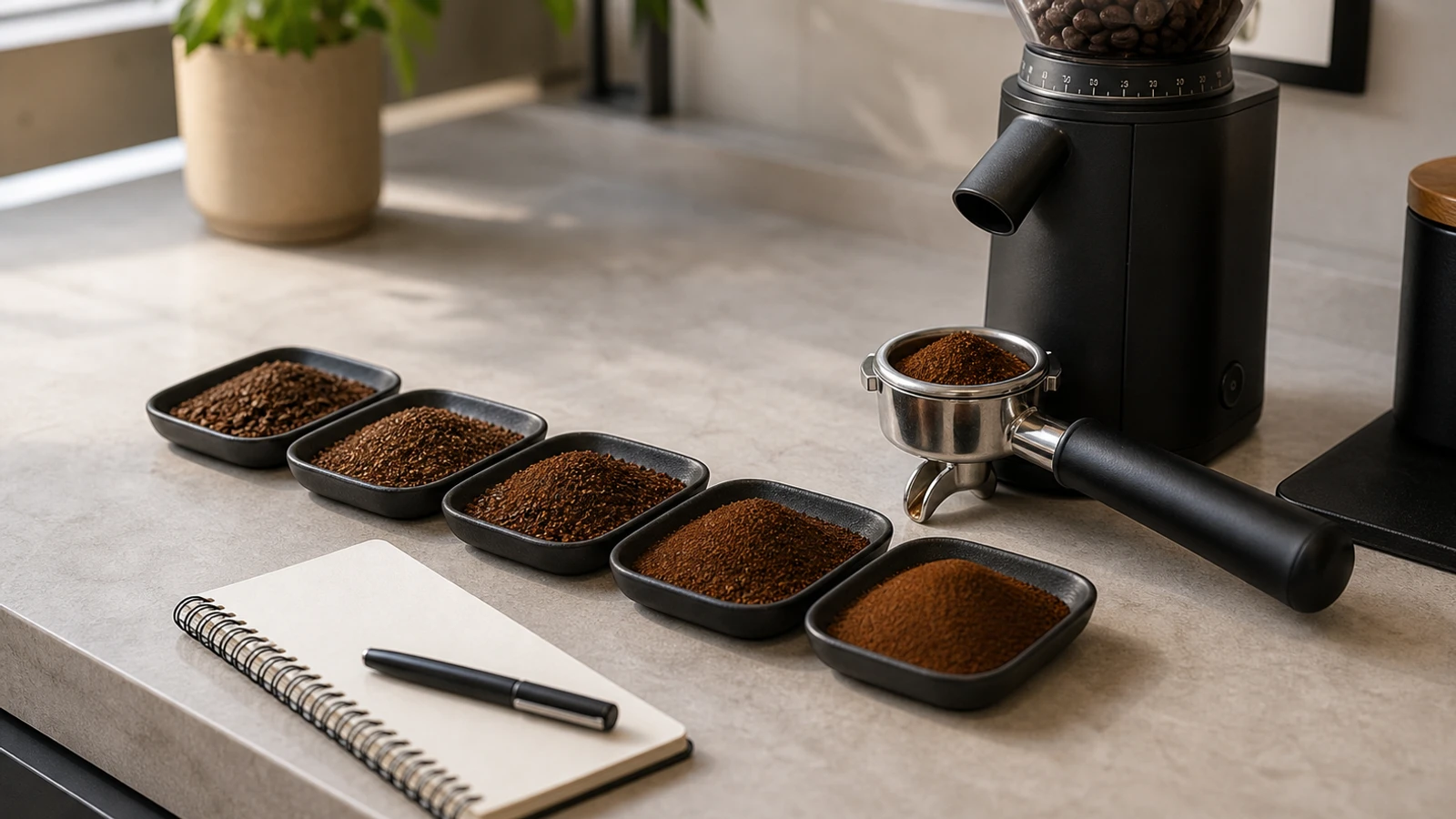
- Grind one small step finer.
- Keep the same dose and yield.
- If still sour, pull a slightly longer yield.
- If your machine allows temperature control, raise brew temperature a little for light roasts.
Do not immediately add more coffee. A higher dose can slow the shot, but it also changes the recipe and makes the next result harder to understand.
Why bitter espresso happens
Bitter espresso usually means too much was extracted, or the coffee itself is roasted dark enough that bitterness dominates. A bitter shot often feels dry on the tongue and leaves a harsh finish.
Most common signs:
- Shot takes 40+ seconds to reach target yield
- Flow is slow and uneven
- Cup tastes dry, burnt, woody, or medicinal
- Finish lingers unpleasantly
Fix in this order:
- Grind one small step coarser.
- Keep the same dose and yield.
- If still bitter, stop the shot earlier.
- For very dark roasts, consider a lower brew temperature if your machine allows it.
If a dark roast tastes bitter at every normal recipe, that may be the roast profile rather than your technique.
Sour and bitter together usually means channeling
Channeling happens when water finds easy paths through the puck. Some coffee gets blasted with water and over-extracts. Other coffee barely extracts. The result can taste sour, bitter, thin, and harsh all at once.
Common channeling causes:
- Uneven distribution before tamping
- Tamping on an angled bed of coffee
- Basket overfilled for the dose
- Grinder producing too many fines
- Puck cracked by tapping after tamping
The fix is not always finer grind. Start with puck prep:
- Break up clumps before tamping.
- Level the bed before applying pressure.
- Tamp flat, not harder.
- Leave enough headspace so the puck does not hit the shower screen.
- Use the same routine every shot.
If a bottomless portafilter sprays, spurts, or splits into multiple streams, that is a puck-prep signal before it is a recipe signal.
The best adjustment order
Use this simple decision tree:
- Shot too fast and sour: grind finer.
- Shot too slow and bitter: grind coarser.
- Time looks normal but flavor is sour and bitter: fix puck prep.
- Time looks normal but flavor is weak: check beans and ratio.
- Every shot tastes burnt: clean the machine or try a lighter roast.
Only change yield after grind is close. Yield changes flavor balance, but it is easier to use once flow is predictable.
Milk drinks can hide the diagnosis
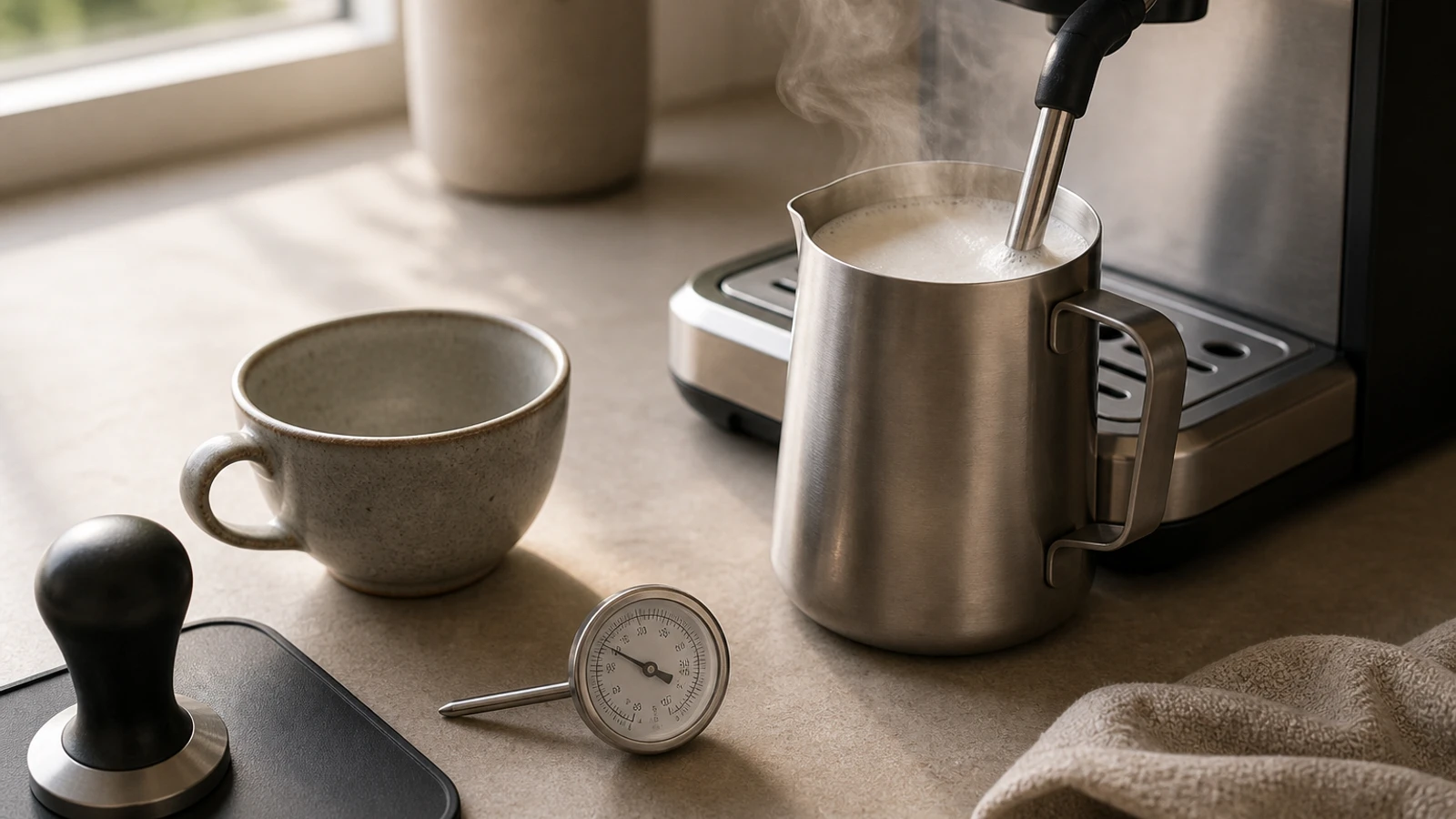
Milk softens bitterness and adds sweetness, so a bad espresso shot can still make an acceptable latte. That is useful, but it can slow learning. When you are dialing in a new coffee, taste a small sip of the espresso before adding milk. You do not need to enjoy it as straight espresso; you only need to learn what the base shot is doing.
For milk drinks, slightly longer and sweeter shots often work better than very short, intense shots. But if the base espresso is harsh, milk will not fully fix it.
When to stop adjusting
Home espresso does not need cafe perfection. Stop when the shot is repeatable and the drink tastes good. If a recipe works three times in a row, write it down:
- Bean name and roast date
- Dose
- Yield
- Time
- Grinder setting
- Taste note
That record saves more time than chasing one perfect shot and forgetting how you got there.
Sources and further reading
- Specialty Coffee Association coffee standards
- Barista Hustle Espresso Compass
- La Marzocco Home FAQ on cleaning and water
Frequently asked questions
- Why does my espresso taste sour even with a long shot time?
- A long shot can still taste sour if the puck channels. Water may be over-extracting one path while leaving the rest under-extracted. Improve distribution and tamp level before grinding much finer.
- Is bitter espresso always over-extracted?
- No. Dark roast coffee, dirty equipment, or old coffee oils can taste bitter even at normal shot times. Clean the machine and check the roast before assuming recipe alone is responsible.
- Should espresso taste good without milk?
- It should be balanced enough to diagnose. You may still prefer it with milk, but the straight shot should not be aggressively sour, burnt, or hollow.
Last updated May 7, 2026. See our editorial policy for methodology and corrections.
The Signal Brief
One useful dispatch each week.
One sharp take, three things worth reading, and the week's buying signals.