
Espresso
Home Espresso Machine Cleaning Schedule: Daily to Monthly
What to clean after each drink, each week, and each month so espresso tastes cleaner and the machine lasts longer.
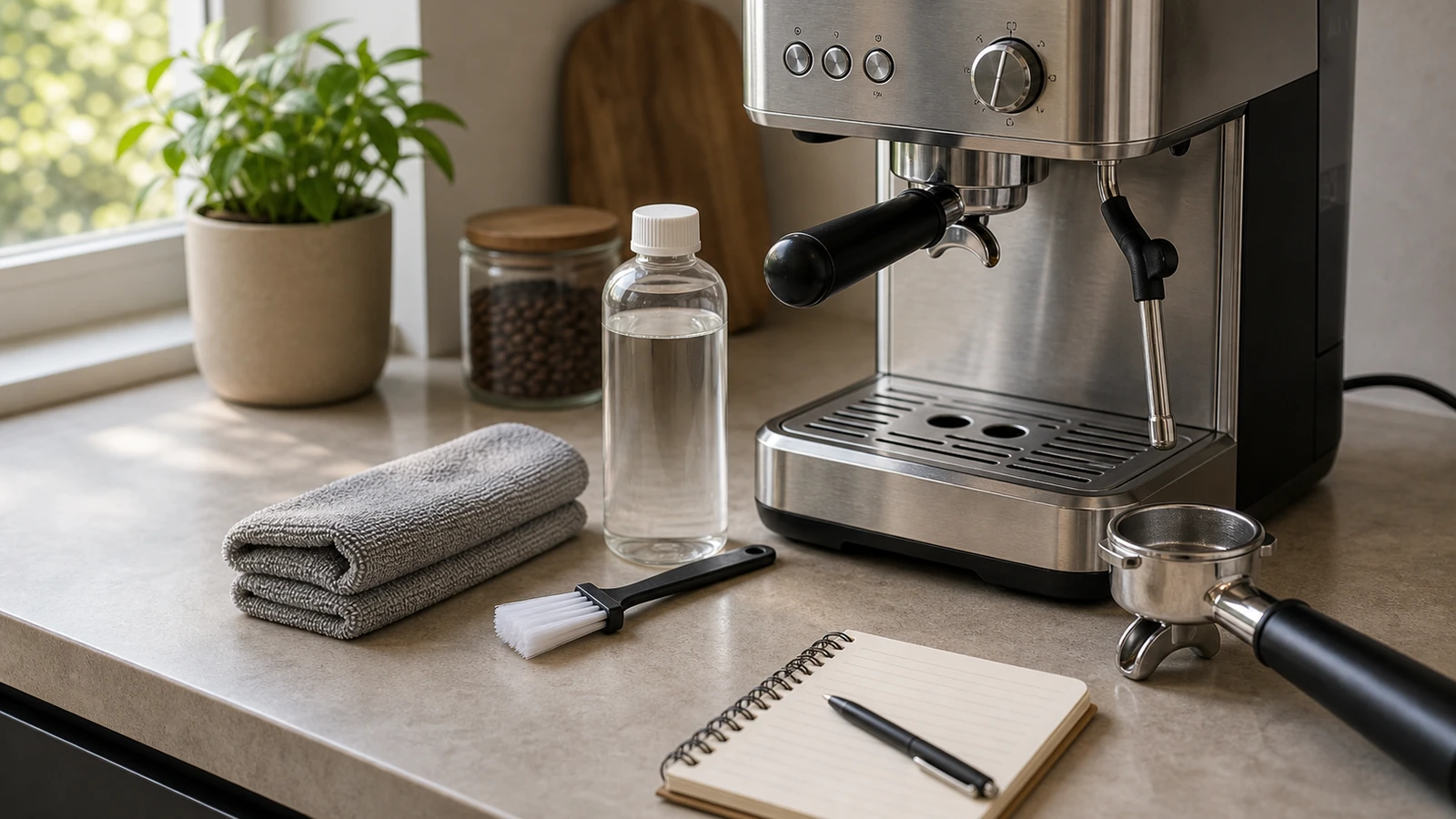
Espresso maintenance is less dramatic than it sounds. Most home problems come from the same small things: milk left on the steam wand, old coffee oils in the basket, grounds around the gasket, a full drip tray, or water that slowly scales the machine.
You do not need to rebuild the machine every month. You do need a routine.
The simple cleaning schedule
| Frequency | What to clean | Why it matters |
|---|---|---|
| After every drink | Steam wand, portafilter, basket, puck screen if used | Prevents milk residue and stale oils |
| Daily | Drip tray, group flush, work area | Keeps old coffee and water from building up |
| Weekly | Basket soak, portafilter soak, group gasket wipe | Removes coffee oils that hurt flavor |
| Weekly or as manual allows | Backflush with water or detergent | Cleans group path on compatible machines |
| Monthly | Grinder chute, burr chamber check, water hardness check | Keeps flow and dosing consistent |
| As needed | Descale or replace water filter | Reduces scale risk |
The exact schedule depends on use. A machine pulling two milk drinks per day needs more steam-wand attention than a machine used only for straight shots.
After every drink
Do these before the machine cools:
- Knock out the puck.
- Rinse or wipe the basket.
- Flush the group briefly.
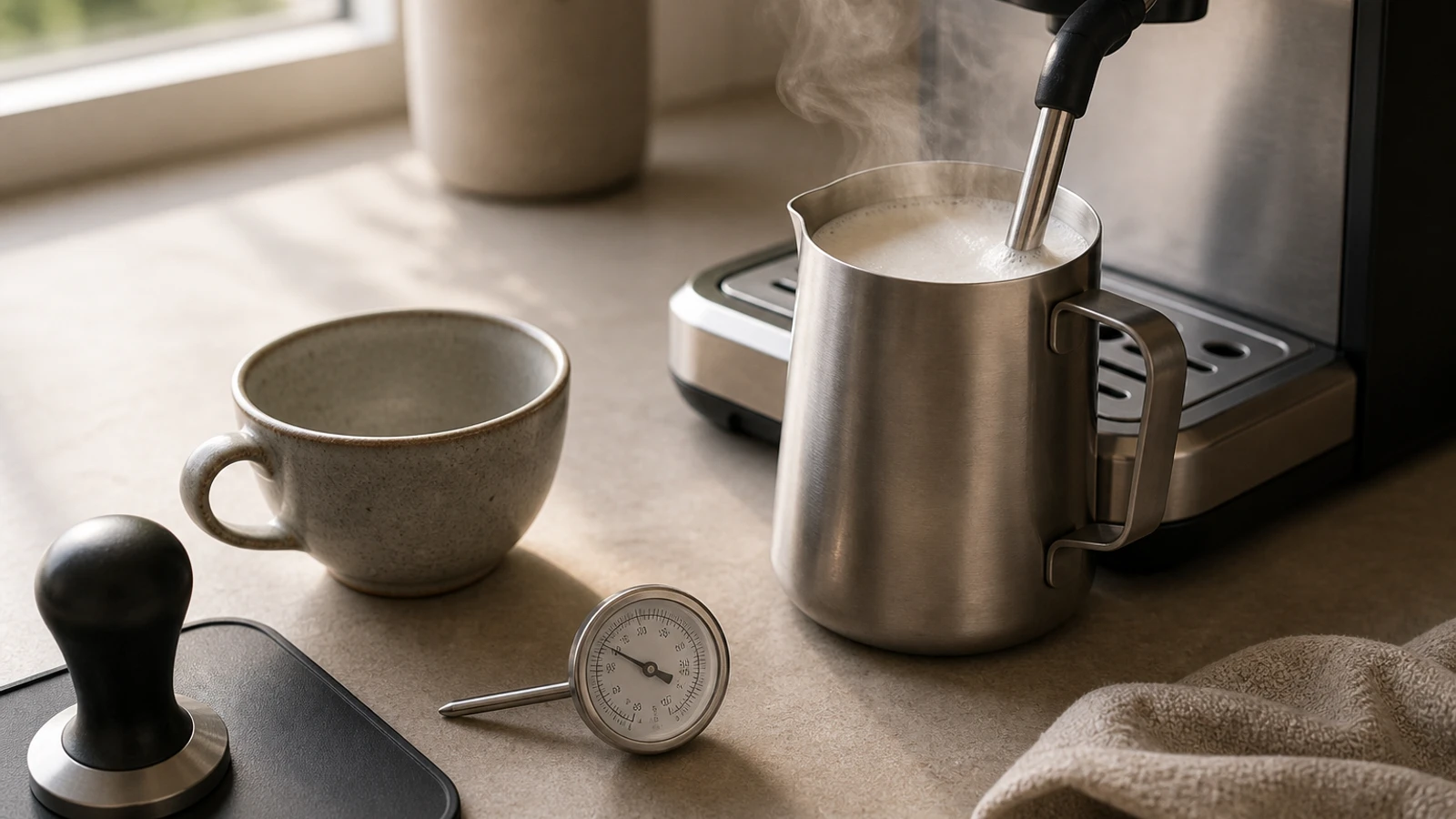
- Wipe the steam wand with a damp cloth.
- Purge the steam wand for a second after steaming milk.
Milk residue hardens quickly. If it dries on the steam wand, it becomes more than cosmetic: it can affect steam performance and create off smells.
Daily cleanup
At the end of the day:
- Empty and rinse the drip tray.
- Rinse the portafilter and basket.
- Wipe coffee grounds from the group gasket area.
- Flush the group to remove loose grounds.
- Leave parts dry enough that water is not sitting overnight.
This is the routine that prevents most “my espresso suddenly tastes bad” problems.
Weekly cleaning
Once a week, remove coffee oils from the parts that touch espresso:
- Soak baskets in espresso machine cleaner if your manual allows it.
- Soak metal portafilter parts, but avoid soaking wood handles.
- Brush or wipe the group gasket area.
- Clean the shower screen if your machine design allows easy access.
- Run a backflush cycle if the machine is designed for it.
Backflushing is for machines with the right group and valve design. Many prosumer machines support it. Some entry-level thermoblock machines and pressurized systems do not. If your manual does not mention backflushing, do not assume it is safe.
Monthly maintenance
Every month, look at the systems that quietly change shot quality:
Water
Hard water can scale boilers, thermoblocks, valves, and sensors. If your machine uses a filter, replace it on schedule. If you mix brewing water, keep the recipe consistent. If scale appears in the tank or kettle, do not ignore it.
Grinder
Coffee oils and fines collect in the chute and burr chamber. Brush out loose grounds and check whether retention has increased. If the grinder suddenly needs a much finer setting for the same coffee, cleaning may be part of the answer.
Gasket and screen
A worn group gasket can leak around the portafilter. A dirty screen can spread water unevenly across the puck. Both issues can look like dialing problems even when the recipe is fine.
Descaling: do not guess
Descaling depends on machine type and water chemistry. Some machines are designed for user descaling. Others can be damaged if the wrong solution is run through the machine or left inside too long.
Use the manufacturer instructions. If your machine has boilers, sensors, or plumbed water, and you are not sure, ask the manufacturer or a technician before descaling.
The best descaling strategy is prevention: use water that is inside the machine maker’s recommended range.
Flavor signs your machine needs cleaning
Cleaning is not only about hygiene. It changes cup quality.
Watch for:
- Bitter, rancid, or ashy finish across different coffees
- Espresso that tastes dirty even when extraction looks normal
- Milk wand smell after steaming
- Slow water flow from a group that used to flow normally
- Grounds stuck around the gasket
If every coffee starts tasting the same kind of bad, clean before buying another bag or changing the grinder.
What not to do
- Do not use household dish soap inside the group.
- Do not soak electronics, wood handles, or coated parts.
- Do not backflush a machine unless the manual supports it.
- Do not descale blindly because a forum said to.
- Do not leave detergent residue in the portafilter or group.
Espresso cleaners are strong because coffee oils are stubborn. Rinse well.
Sources and further reading
- La Marzocco USA guide to backflushing
- La Marzocco Home FAQ on maintenance
- Specialty Coffee Association coffee standards
Frequently asked questions
- How often should I clean a home espresso machine?
- Wipe and purge after each drink, clean the tray and basket daily, and do a deeper weekly cleaning for parts that collect coffee oils. Follow your machine manual for backflushing and descaling.
- Can every espresso machine be backflushed?
- No. Backflushing is only for machines designed for it, typically machines with a compatible group and valve system. If the manual does not mention backflushing, do not assume it is safe.
- Why does my espresso taste bitter even after dialing in?
- Old coffee oils, a dirty basket, a dirty portafilter, or residue around the group can make otherwise reasonable shots taste bitter or stale. Clean the equipment before changing the recipe again.
Last updated May 7, 2026. This is general maintenance guidance, not repair advice. See your machine manual and our editorial policy.
The Signal Brief
One useful dispatch each week.
One sharp take, three things worth reading, and the week's buying signals.