
Pickleball
JOOLA vs Selkirk Paddles: Which Brand Wins in 2026?
Two dominant pickleball brands, different design philosophies. JOOLA leans power and spin; Selkirk leans control and touch. Honest compare.
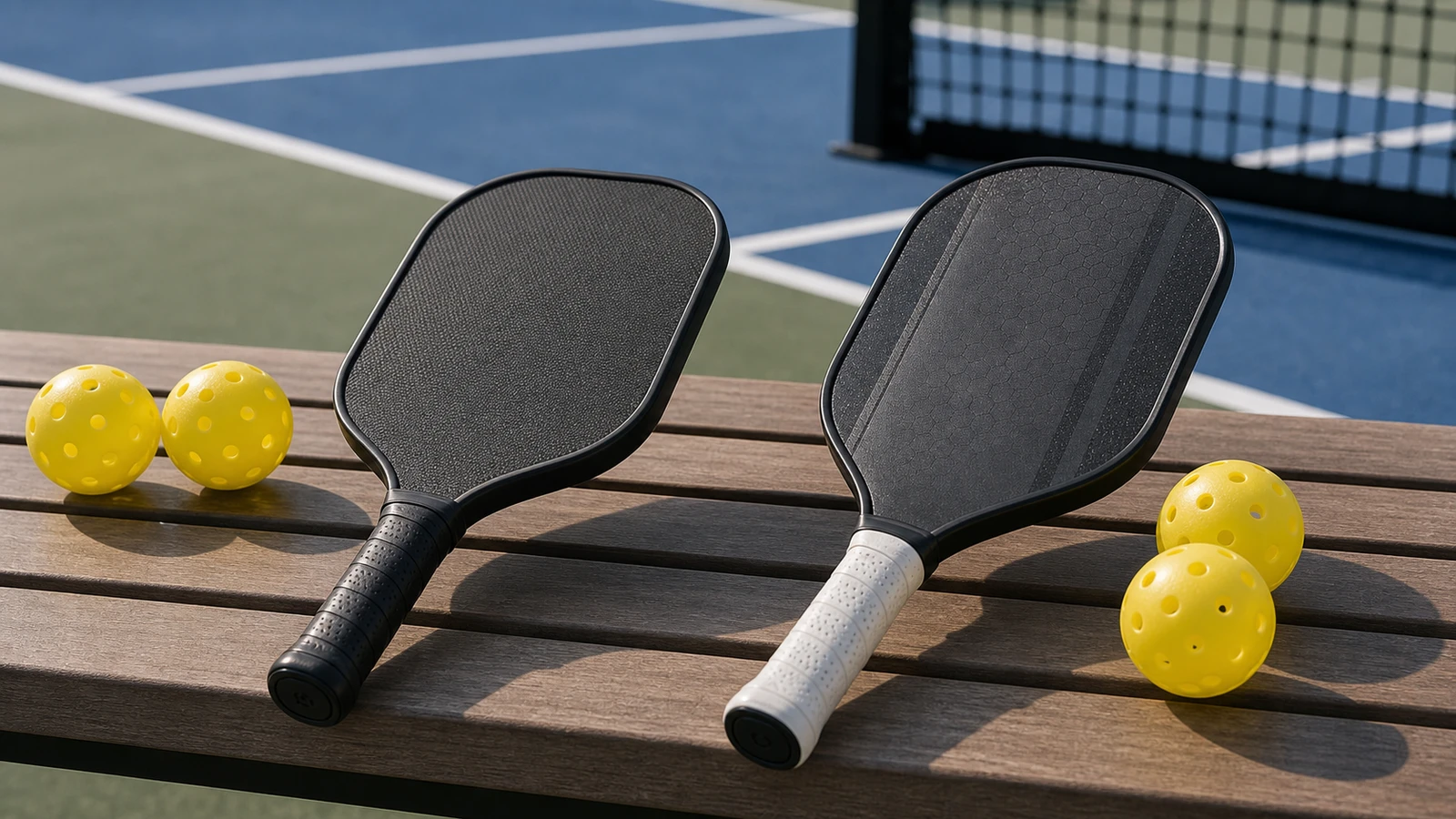
JOOLA and Selkirk together make up roughly 40% of premium pickleball paddle sales in the US. Both have excellent lineups. Both are played by top pros. But they optimize for different play styles, which means the “better” brand depends entirely on what kind of player you are.
This is the head-to-head comparison based on manufacturer specs, published expert reviews, and community feedback.
Brand identities
JOOLA — the power brand
JOOLA paddles are engineered for pace and spin. The flagship Perseus Pro IV uses a propulsion polymer core paired with textured carbon fiber and Tech Flex Power construction — every element tuned for ball speed. The Hyperion CFS and Scorpeus lines follow the same philosophy at different weight classes.
Used by: Ben Johns (the most dominant player in pickleball history), Collin Johns, most of the Pro Tour’s aggressive baseliners.
Identity: Aggressive, attacking, pro tour.
Selkirk — the control brand
Selkirk paddles are engineered for touch and dwell time. The LUXX Control Air uses a 20mm plush polymer core; the LABS line extends dwell via PureFoam cores; the Vanguard Pro Epic layers carbon fiber over foam edges for sweet-spot forgiveness. Every flagship optimizes for keeping the ball on the face longer.
Used by: Tyson McGuffin, Catherine Parenteau, many of the Pro Tour’s control-first players.
Identity: Patient, precise, control-first.
Head-to-head by dimension
Power
JOOLA wins. The Perseus Pro IV generates roughly 5–8% more ball speed at equivalent paddle swing versus the Vanguard Pro. The Hyperion CFS and Scorpeus are close to the Perseus in power.
Selkirk’s LUXX and LABS lines are intentionally lower-power by design.
Spin
JOOLA edge. JOOLA’s textured carbon fiber face produces marginally more grip than Selkirk’s smoother faces. Pro players who specialize in heavy topspin (Ben Johns, Connor Garnett) overwhelmingly prefer JOOLA.
Selkirk’s spin is competitive but not category-leading.
Control
Selkirk clearly wins. The longer dwell time on every Selkirk flagship gives you more time to shape shots. Drops, dinks, and resets are measurably more consistent on Selkirk paddles.
Dwell time / soft game
Selkirk clearly wins. The LUXX Control Air’s 20mm polymer core has the longest dwell time of any mass-produced paddle. For players whose game is built around soft-game dominance, Selkirk is the answer.
Off-center forgiveness
Selkirk wins slightly. Larger effective sweet spots on the SLK Halo and Vanguard Pro Epic. JOOLA’s tighter sweet spot rewards clean contact but punishes mishits more.
Durability
Near tie. Both brands deliver 12–18 months of competitive play life at premium tier. JOOLA edge guards occasionally separate earlier; Selkirk face texture dulls slightly faster.
Price
Near tie. Both flagships sit in the $220–$280 range. Selkirk SLK budget line goes slightly lower ($140 Halo). JOOLA doesn’t have an equivalent budget flagship.
Community / aftersale support
JOOLA edge. Stronger social presence, more visible pro endorsement, more active community threads. Selkirk’s support is solid but less visible.
Specific model comparisons
Flagship power: JOOLA Perseus Pro IV vs Selkirk Vanguard Pro Epic
- Perseus Pro IV: 8.1 oz, 16mm propulsion core, 5.5” handle, elongated 16.5”. Aggressive all-court weapon.
- Vanguard Pro Epic: 8.0 oz, 16mm polymer + foam, 5.25” handle, hybrid elongated. Control-biased all-court.
- Verdict: Perseus for aggression; Vanguard for versatility.
Control-specialty: Not really a JOOLA equivalent vs Selkirk LUXX Control Air Epic
- LUXX Control Air Epic: 8.0 oz, 20mm polymer, 5.25” handle, hybrid. Best pure-control paddle in mainstream market.
- JOOLA equivalent: none truly. The Scorpeus is JOOLA’s “control flagship” but still leans power relative to LUXX.
- Verdict: If pure control is the priority, Selkirk wins this match.
Budget tier: JOOLA Method vs Selkirk SLK Halo
- JOOLA Method: ~$130, solid entry-level with JOOLA build quality.
- Selkirk SLK Halo: ~$140, lighter (7.3 oz), more forgiving, better for older or smaller players.
- Verdict: Halo for beginners and seniors; Method for younger aggressive players.
By player archetype
Aggressive baseliner (DUPR 4.0+)
JOOLA. Perseus Pro IV or Hyperion CFS. You want the pace and spin to force weak returns.
Patient kitchen player (any level)
Selkirk. Vanguard Pro Epic or LUXX Control Air. You want the dwell time to shape every soft shot.
Tennis convert
JOOLA. The firmer, more reactive feel is closer to tennis strings. Perseus Pro IV’s 5.5” handle also accommodates two-handed backhands.
Senior / recovering from elbow pain
Selkirk. SLK Halo or LUXX Control Air. Gentler feel, lower vibration, larger sweet spot.
Spin specialist
JOOLA for straight topspin drives; Selkirk for spin on soft shots. Most spin specialists own both.
Beginner (under 3.0 DUPR)
Selkirk SLK Halo. More forgiving, less punishing on mishits. You’ll develop technique faster.
Tournament-focused competitive player
Depends on your game. If you dominate through aggression → JOOLA. If you dominate through patience → Selkirk. Most pros gravitate to one and stick with it.
What both brands do well
- Tournament ball approval. Both have multiple USAPA-approved paddles across tiers.
- Annual iteration. Both release Gen 2, Gen 3, Gen 4 improvements steadily.
- Warranty and support. Both offer 30-day play guarantees and handle defects promptly.
- Pro endorsements. Both have credible pro tour representation.
What neither brand is best at
- Ultra-budget tier (under $80). Neither brand competes here; direct-to-consumer brands (Vatic Pro, The Doctor) dominate.
- Vibration dampening for injury recovery. Neither matches ProKennex’s Kinetic system for measured impact reduction.
- Custom shapes / extreme specs. Six Zero and Honolulu offer more variety in extra-long handles and unusual shapes.
Frequently asked questions
- Is JOOLA better than Selkirk for pickleball?
- Neither is strictly better. JOOLA paddles optimize for power, pop, and spin — better for aggressive baseliners and tennis transitions. Selkirk paddles optimize for control, dwell time, and touch — better for kitchen-line play, seniors, and control-first players. Pick based on your play style, not brand loyalty.
- Which pros use JOOLA vs Selkirk?
- JOOLA: Ben Johns, Collin Johns, Connor Garnett, and most of the aggressive Pro Tour. Selkirk: Tyson McGuffin, Catherine Parenteau, JW Johnson, and most of the control-oriented Pro Tour. The split roughly mirrors each pro's playing style.
- Does JOOLA or Selkirk have a better budget paddle?
- Selkirk's SLK Halo at ~$140 is slightly better than JOOLA's Method at ~$130 for most recreational players, due to lighter weight (7.3 oz vs 7.9 oz) and larger sweet spot. For strength-forward younger players, the JOOLA Method may feel crisper.
- Is JOOLA harder to control than Selkirk?
- Yes, measurably. JOOLA's stiffer construction and shorter dwell time make precise soft shots (drops, resets) harder. For a 3.0–3.5 player learning control, Selkirk is usually the faster-improving paddle choice.
- Can I switch between JOOLA and Selkirk mid-season?
- It's possible but disorienting. The two brands' characteristic feel differs enough that you lose some muscle memory during the switch. Most players pick one brand philosophy and stick with it long enough to maximize technique development (6+ months minimum).
- Which brand has the best paddle for two-handed backhand?
- Both offer 5.5-inch handles on flagships. JOOLA Perseus Pro IV is the more common choice for tennis converts (firmer feel). Selkirk Vanguard Pro Invikta is the control-first option for two-handers who prioritize kitchen touch.
Sources and further reading
- JustPaddles: JOOLA vs Selkirk
- Custom Pickleball Bands: Selkirk vs JOOLA 2025
- The Pickleball Dinks: Ranking Paddle Brands
- Pickleheads: Best Advanced Paddles 2026
- Related: Paddle Finder tool · CRBN vs JOOLA Gen 3 · Best Paddle for Tennis Players
Last updated May 18, 2026.
The Signal Brief
One useful dispatch each week.
One sharp take, three things worth reading, and the week's buying signals.