
Pickleball
JOOLA Perseus Pro IV vs Selkirk Luxx Control Air (2026)
Two $250+ premium paddles, two different philosophies. Perseus: power and spin. Luxx: control and touch. Here's which fits your game.
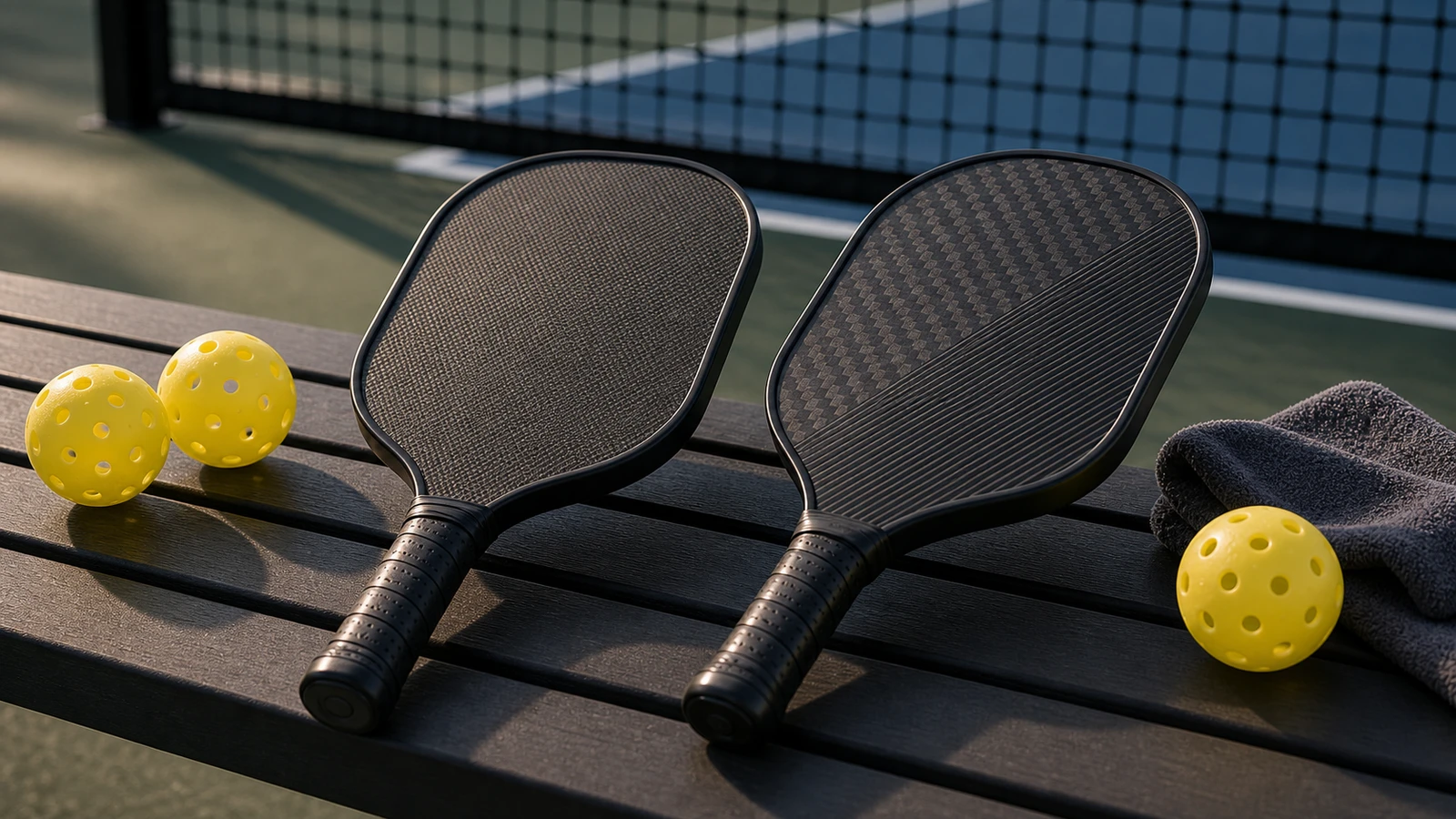
The JOOLA Perseus Pro IV and Selkirk Luxx Control Air sit at the premium end of the paddle market — both cost $250 or more, both are pro-endorsed, and both use elongated shapes with thermoformed construction. On paper they look similar. On court they play very differently.
Perseus is Ben Johns’s paddle: a power and spin specialist. Luxx is Tyson McGuffin’s touch weapon: a control and feel specialist. Whichever one fits your game depends on what you’re already good at — and what you want to improve.
Quick spec comparison
| Paddle | Weight | Core | Handle | Shape | Price | Score |
|---|---|---|---|---|---|---|
| JOOLA Perseus Pro IV | ~8.2oz | 16mm thermoformed foam-edged polymer | 5.25" length | Elongated (16.5" × 7.5") | ~$250 | 9.3 / 10 |
| Selkirk Luxx Control Air Invikta | ~8.0oz | 16mm polymer + control-tuned foam edges | 5.25" length | Elongated tapered Invikta (16.5" × 7.375") | ~$280 | 9.2 / 10 |
The core philosophy difference
JOOLA Perseus Pro IV — built for banging and spin
Perseus was designed around Ben Johns’s game: aggressive drives, heavy topspin, and put-away speed-ups. The foam-edge construction adds pop without sacrificing the sweet spot, and JOOLA’s carbon face creates one of the gripiest textures on the market.
Shots it rewards: third-shot drives, counter-attacks, topspin rolls, overhead put-aways. You can swing hard and the paddle stabilizes the ball on off-center hits.
Shots it doesn’t help with as much: resets. The power profile means soft hands need more deliberate deceleration. Dinks work fine but don’t feel as plush as a control paddle.
Selkirk Luxx Control Air — built for kitchen battles
Luxx Control Air uses Selkirk’s “Control Air” foam tuning — foam edges with lower-pop construction, trading raw power for a plusher, more absorptive feel. The invikta elongated-tapered shape gives the reach advantage of elongated paddles but trims tip weight for better handling.
Shots it rewards: dinks, resets, blocks, counter-drops, touch speed-ups. The paddle absorbs pace well and lets you feather the ball precisely at the net.
Shots it doesn’t help with as much: first-strike power. You can still drive the ball, but you won’t generate Perseus-level pop. Serves and bangers feel muted compared to a power paddle.
Head-to-head on specific shots
Drive / banger shots
Perseus wins clearly. The foam-edged construction plus JOOLA’s textured carbon face translate swing speed into pace and spin at a higher ratio than Luxx. If your game relies on aggressive drives off the third shot or counter-attacks, Perseus is the obvious pick.
Luxx can drive fine, but the ball comes off softer. In a bang-and- counter rally, Perseus users often have the edge.
Dinks and resets
Luxx wins clearly. The lower-pop foam tuning makes slow shots feel natural. Resets sit down in the kitchen. Dinks can be aimed with millimeter precision.
Perseus can reset, but the inherent pop means you have to slow down your swing more deliberately. Many Perseus users lose resets into the net or long because the paddle wants to generate pace.
Spin
Perseus wins by a small margin. Both paddles grip the ball well (both use premium carbon faces with aggressive peel-ply texture), but Perseus’s firmer pop makes topspin drives particularly explosive.
That said, Luxx generates plenty of spin for most players. The difference is marginal — both paddles are in the top tier for spin generation in 2026.
Serve
Slight Perseus edge. More pop = more serve speed. Drop serves and topspin serves work great on both; flat power serves are easier on Perseus.
Blocks and counters
Luxx wins. Blocks at the kitchen are a touch shot. You want the ball to sit down. Luxx absorbs pace naturally; Perseus wants to redirect pace forward.
Overhead put-aways
Perseus wins. Overhead slams need pop. Perseus delivers it.
The elongated shape trade-off
Both paddles are elongated (~16.5” total length, around 7.375–7.5” wide). Elongated shapes give you:
- Longer reach — critical for defense and poaches.
- Bigger sweet spot lengthwise — helps on full swings.
- More leverage for spin — whip feels stronger.
But they also cost you:
- Slower hand speed — 16.5” elongated is harder to maneuver in fast hands battles than 16” or 15.5” standard shapes.
- Smaller sweet spot widthwise — off-center mishits go more obviously.
If you’re playing high-level 4.5+ pickleball, elongated is almost always worth it. If you’re intermediate and your hands are still developing, a standard shape might serve you better — but neither Perseus nor Luxx is sold in a standard shape variant.
Who should pick which
Pick Perseus Pro IV if:
- You play aggressive baseline-style pickleball: drives, counter-attacks, hard third shots.
- Your game revolves around generating pace, not absorbing it.
- You want to improve your topspin without switching to a raw foam paddle.
- You’re 4.0+ and comfortable with elongated shapes.
- You want a paddle endorsed by the world’s top player (Ben Johns).
Pick Luxx Control Air if:
- You win at the kitchen — dinks, resets, counter-drops, touch speed-ups.
- You need better control because your power game is working fine.
- You play doubles more than singles (control paddles shine in 4-player kitchen battles).
- You’re 4.0+ and your hands are already fast.
- You want a paddle endorsed by the world’s best singles player (Tyson McGuffin).
Where they’re similar
- Both use 16mm core depth — standard for modern premium paddles.
- Both weigh 8.0–8.2oz — mid-weight, neither heavy nor light.
- Both have 5.25” handles — accommodate one-handed and two-handed backhands.
- Both use premium carbon faces with peel-ply texture for spin.
- Both have excellent build quality — edge guards are clean, no rattle, no manufacturing defects reported in 2026 production.
- Both are USAPA-approved for tournament play.
- Both come with a 1-year warranty (JOOLA 90 days, Selkirk 1 year actually — see warranty section below).
Where they differ in fine print
Warranty
- Perseus: 90-day manufacturer warranty covering defects, not wear.
- Luxx: 1-year warranty. Selkirk traditionally has longer and more generous warranty coverage than JOOLA.
Luxx wins on warranty.
Resale value
Both hold value reasonably well on the secondary market. Current used market (late 2026) pricing:
- Perseus Pro IV used: ~$160–180
- Luxx Control Air used: ~$180–200
Luxx holds slightly more value, partly because Selkirk customers tend to keep paddles longer and partly because Luxx is harder to find in stock.
Availability
- Perseus Pro IV — widely available, stocked at major retailers.
- Luxx Control Air — limited release, often sells out, backorders common.
If you want the paddle in hand this week, Perseus is easier to get.
What about the Perseus Pro IIX or Luxx S2 Power?
Both JOOLA and Selkirk release incremental updates every year. As of 2026:
- Perseus Pro IIX (2025) exists but was replaced by Pro IV (2026). Pro IV has slightly refined foam edges. Don’t overthink — either works.
- Selkirk Luxx S2 Power is a power-oriented sibling to Luxx Control Air. If you were on the fence leaning toward Perseus’s pop, Luxx S2 is Selkirk’s answer.
The short decision flow
- Do you want more power in your game? → Perseus
- Do you want better control and touch? → Luxx
- Are you between 3.5 and 4.0? → Either works; pick whichever addresses your weaker side.
- Are you 4.5+? → You probably already know which fits your style.
- Do you prefer more aggressive or more patient doubles? → Aggressive = Perseus. Patient = Luxx.
Frequently asked questions
- Is the JOOLA Perseus Pro IV worth $250?
- If you play 4.0+ pickleball and want a power-oriented elongated paddle, yes. The thermoformed foam-edge construction and premium carbon face justify the price. Below 4.0, the benefits are harder to extract — a $100 paddle will play similarly.
- Is the Selkirk Luxx Control Air worth $280?
- For touch players and kitchen specialists at the 4.0+ level, yes. Control paddles are harder to make well, and the Luxx's foam tuning is genuinely distinctive. Below 4.0, a mid-tier control paddle will give similar results for less money.
- Which is better for intermediate (3.5–4.0) players?
- Perseus is slightly more forgiving due to its larger effective sweet spot and pop (easier to generate pace even with imperfect contact). Luxx rewards already-developed hands more. If you're on the fence, Perseus is the safer pick at the intermediate level.
- Which paddle has more spin potential?
- Perseus has slightly more spin potential on aggressive topspin drives due to its pop, but both are in the top tier for spin in 2026. The difference is small and most players won't notice a meaningful gap.
- Can one paddle do both power and control?
- Not really at this tier. Paddles optimize for one style or the other. Perseus does control adequately; Luxx does power adequately. But neither is a true 'both' paddle. The CRBN TruFoam tries harder to split the difference, but even it leans toward one end.
- How long do these premium paddles last?
- Both should give you 12–24 months of heavy (5+ hours/week) play before face wear and edge softness degrade performance. Rec players (2–3 hours/week) can expect 2–3 years. Carbon face paddles tend to show wear visually before they play worse.
Sources and further reading
- JOOLA Perseus Pro IV Official
- Selkirk Luxx Control Air Official
- Paddle Tracker by Pickleheads
- Related: Best Paddle for Tennis Players · Best Intermediate Paddles · Best Paddles Under $100
Last updated April 23, 2026. See our editorial policy for methodology. Reviews based on aggregated research, spec comparisons, and community reports — not independent physical testing.
The Signal Brief
One useful dispatch each week.
One sharp take, three things worth reading, and the week's buying signals.