
Smart Home
Smart Blinds vs Smart Curtains: Retrofit Choices
Smart blinds, shades, and curtain motors solve different privacy, light, power, and installation problems. Here is how to choose.
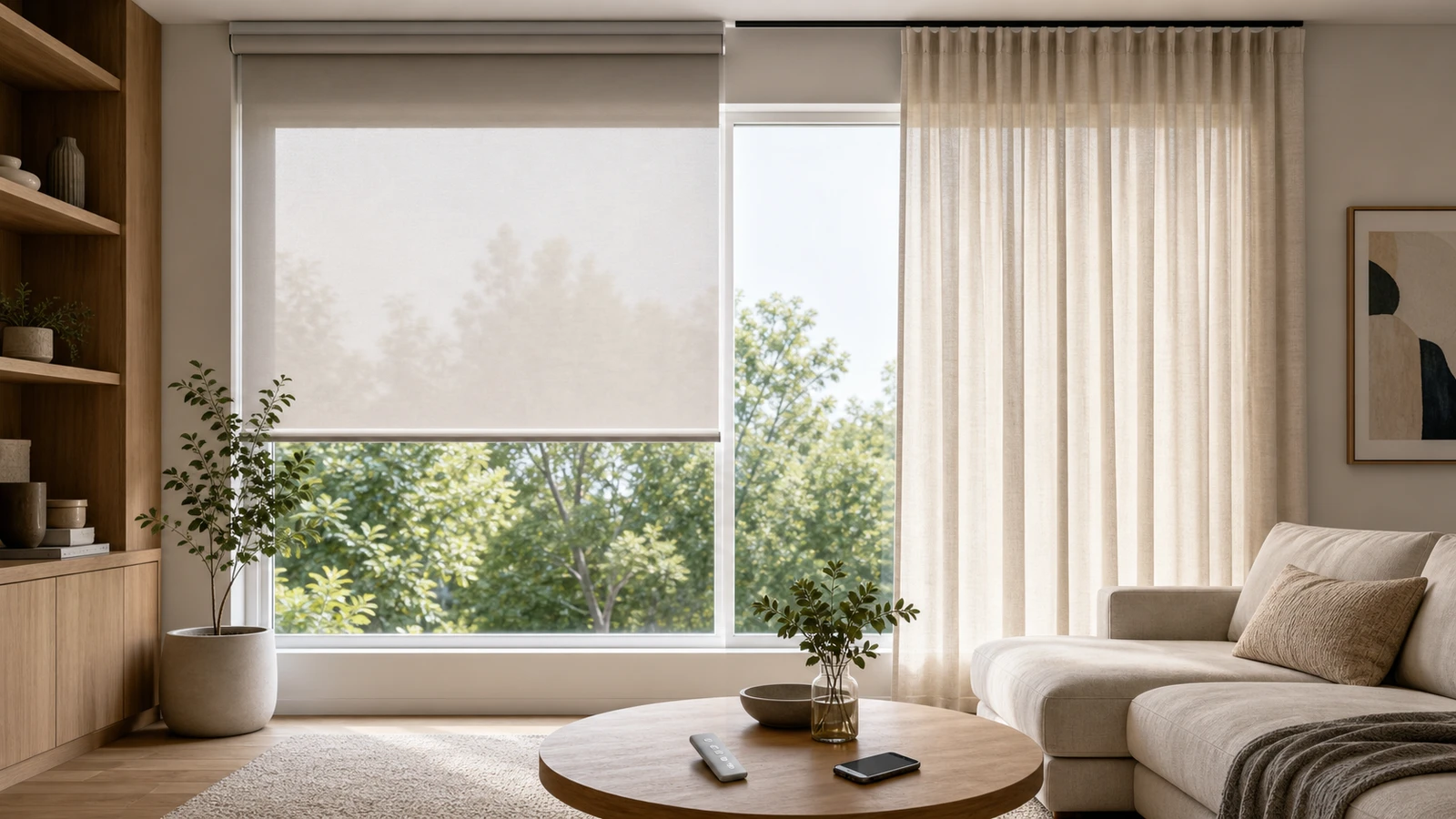
Smart blinds, smart shades, and smart curtain motors all automate window coverings, but they solve different problems.
Blinds and shades usually give cleaner light control. Curtain motors are often easier to retrofit when you already like your curtains. The right choice depends on privacy, power, installation, and whether you rent.
Choose smart blinds or shades when
Smart blinds or roller shades make sense when:
- You want precise light filtering.
- The window needs a clean, built-in look.
- You are replacing old coverings anyway.
- You want consistent schedules across several windows.
- You can measure accurately.
- Battery access or wiring is practical.
They are usually the more integrated option, but also the more measurement- sensitive option.
Choose smart curtain motors when
Curtain motors make sense when:
- You already have curtains you like.
- You rent and want a less permanent change.
- The window is wide or decorative.
- You want blackout fabric without replacing the whole setup.
- You can accept a visible track or motor.
The tradeoff is that curtain motors can be more affected by track friction, fabric weight, and installation quality.
Power and maintenance
Before buying, check:
- Battery life and charging access.
- Whether a solar panel option is realistic for the window.
- Noise level.
- Manual operation if the motor fails.
- Weight limits.
- Mounting hardware.
- Whether schedules run locally or need cloud service.
Motorized window coverings become annoying quickly if charging is difficult.
Privacy automations
Useful automations include:
- Close at sunset.
- Open gradually in the morning.
- Close street-facing windows at night.
- Close during peak afternoon sun.
- Pause schedules when windows are open, if sensors support it.
Avoid routines that expose rooms unexpectedly. Test privacy routines at the actual time of day, not only during setup.
Measurement and fit checks
Window-covering mistakes are expensive because small measurement errors can make the product unusable. Measure width, height, depth, mounting clearance, trim shape, handle clearance, and whether the window opens inward or outward. For inside-mount shades, depth matters as much as width. For curtain motors, track shape, fabric weight, and glide resistance matter more than the app.
If you rent, treat every screw hole, bracket, and track change as a lease question. Adhesive or tension-mounted solutions may still leave marks or fail under load, so test with the actual fabric and window.
Power choices
Battery motors are convenient until the charging point is high, hidden, or blocked by furniture. Solar can reduce charging, but only if the window gets enough usable light and the panel can be mounted cleanly. Wired power can be tidier long term, but it is less renter-friendly and may require professional installation.
Before buying, decide who will maintain the system. A covering that needs a ladder every few months may become manual again after the novelty fades.
Privacy and safety routines
Street-facing windows deserve conservative defaults. Close routines should favor privacy at night, but open routines should avoid exposing bedrooms, bathrooms, or guest rooms at the wrong time. If a routine depends on sunrise or sunset, test it across a few days because furniture, shadows, and seasonal light can change the outcome.
For homes with children, avoid corded products where possible and follow the manufacturer’s safety instructions. Smart motorization does not remove every window-covering hazard.
When manual coverings are better
Use manual blinds or curtains when the window is rarely adjusted, when access is easy, when privacy timing is unpredictable, or when the motor would add noise and maintenance without solving a real problem. Automation is most useful on windows that change often or affect comfort, glare, or privacy.
Bottom line
Choose the covering first and the motor second. Smart controls are useful only when the window treatment fits, is safe, can be powered realistically, and handles privacy predictably. A well-fitted manual shade beats a noisy automated one nobody maintains.
Sources and further reading
- CPSC: Window Covering Safety
- FTC: Securing Your Internet-Connected Devices at Home
- NIST IR 8425: Profile of the IoT Core Baseline for Consumer IoT Products
- Related: Smart Home Renter-Friendly Devices
Frequently asked questions
- Are smart curtains better for renters?
- Often yes, if the motor can use existing curtains and does not require permanent changes. Always check lease rules first.
- Do smart blinds need a hub?
- Some do, some do not. Check whether the motor uses Wi-Fi, Bluetooth, Zigbee, Thread, or a brand-specific bridge.
Last updated May 12, 2026. See our editorial policy for methodology and corrections.
The Signal Brief
One useful dispatch each week.
One sharp take, three things worth reading, and the week's buying signals.