
Smart Home
Smart Air Purifier Sensor Guide: What The Numbers Mean
Smart air purifiers and sensors can be useful, but PM2.5, VOC, CADR, and app readings need careful interpretation.
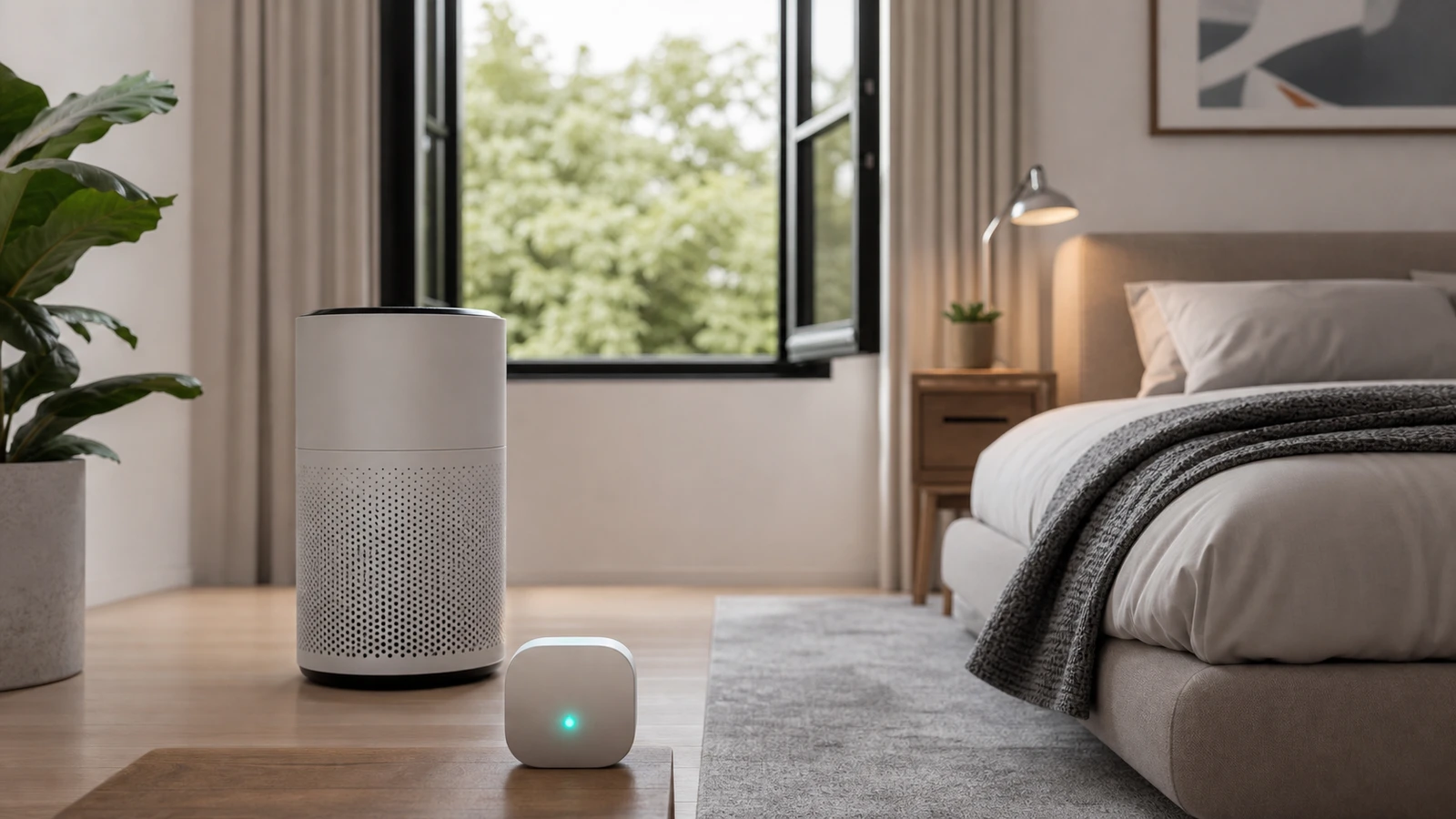
Smart air purifiers can show indoor air readings, change fan speed automatically, and alert you when filters need replacement. Separate air quality sensors can help you notice patterns from cooking, smoke, outdoor air, cleaning products, or poor ventilation.
The numbers are useful, but they are not medical diagnoses and not all sensors measure the same thing well.
The numbers you will see
Common app readings include:
- PM2.5: fine particles, often affected by smoke, cooking, candles, and outdoor pollution.
- PM10: larger particles such as dust and pollen.
- VOC: volatile organic compounds, often from products, finishes, and cleaning activities.
- CO2: sometimes used as a ventilation indicator, though many purifiers do not measure it.
- AQI-style score: a simplified app score that may hide how it is calculated.
Do not compare two devices blindly unless you know what each sensor is actually measuring.
CADR matters more than app polish
For portable air cleaners, Clean Air Delivery Rate, room size, filter type, noise, and replacement filter cost are more important than a beautiful app.
Check:
- CADR for smoke, dust, and pollen where available.
- Room size assumptions.
- Filter replacement cost and availability.
- Noise level at the fan speed you will actually use.
- Whether auto mode responds too slowly or too aggressively.
Smart features that help
Useful features include:
- Automatic fan speed based on particle readings.
- Filter life reminders.
- Schedules for cooking or sleep.
- Clear history trends.
- Local controls on the device.
- A quiet mode that still moves enough air.
Less useful features include vague air scores, unclear VOC claims, and alerts that do not tell you what changed.
Placement matters
Place a purifier where air can move through it:
- Away from curtains and furniture.
- Not sealed behind a sofa.
- Near a source only when the manual allows it.
- In the room you actually want to improve.
- With enough space around intake and exhaust.
For sensors, avoid placing them directly beside the purifier if you want a better room-level reading.
How to compare models without overtrusting apps
Start with the room and pollutant problem, then compare devices. A purifier for cooking particles in a small kitchen has different needs than one for a large living room affected by wildfire smoke or pollen. The app should support the physical performance, not replace it.
Use the same checklist for every model:
- CADR or tested clean-air performance
- room size assumptions
- filter type and replacement cost
- noise at practical fan speeds
- whether auto mode can be overridden
- whether the display can be dimmed at night
- whether controls still work without Wi-Fi
If the product page emphasizes a proprietary score but hides CADR, filter cost, or room-size assumptions, compare carefully.
Reading sensor trends
Consumer sensors are best for trends. A spike during cooking, candle use, cleaning, or outdoor smoke can tell you when to ventilate or run a purifier harder. A flat number does not prove the air is medically safe, and two consumer devices may report different values in the same room.
For VOC readings, be especially cautious. Many consumer VOC sensors are useful for relative changes but not for identifying a specific chemical. If you smell gas, suspect carbon monoxide, or have severe symptoms, follow emergency and medical guidance rather than relying on an app.
Maintenance is part of performance
Filter reminders are only useful if replacement filters are affordable and available. Before buying, check filter price, replacement interval, and whether third-party filters affect performance or warranty. A purifier with a cheap body and expensive filters may cost more over time than it appears.
Also clean prefilters and dust sensors according to the manual. Dirty sensors can make auto mode behave poorly.
When a purifier is not the fix
A purifier can help with particles in a room, but it does not replace source control, ventilation, mold remediation, pest control, or medical care. If the problem is a known source, solve the source first where practical.
Sources and further reading
- EPA: Guide to Air Cleaners in the Home
- EPA: Indoor Air Quality
- FTC: Securing Your Internet-Connected Devices at Home
- Related: Smart Device Software Update Support
Frequently asked questions
- Can a smart air purifier diagnose air quality problems?
- No. It can show useful trends, but consumer sensors are not a substitute for professional assessment or medical advice.
- Is auto mode enough?
- Sometimes. Auto mode can help, but CADR, room size, filter condition, and fan noise still determine real usefulness.
Last updated May 12, 2026. See our editorial policy for methodology and corrections.
The Signal Brief
One useful dispatch each week.
One sharp take, three things worth reading, and the week's buying signals.