
Smart Home
Smart Garage Door Opener Security Checklist
A practical checklist for smart garage door openers, including alerts, shared access, safety sensors, Wi-Fi, and account security.
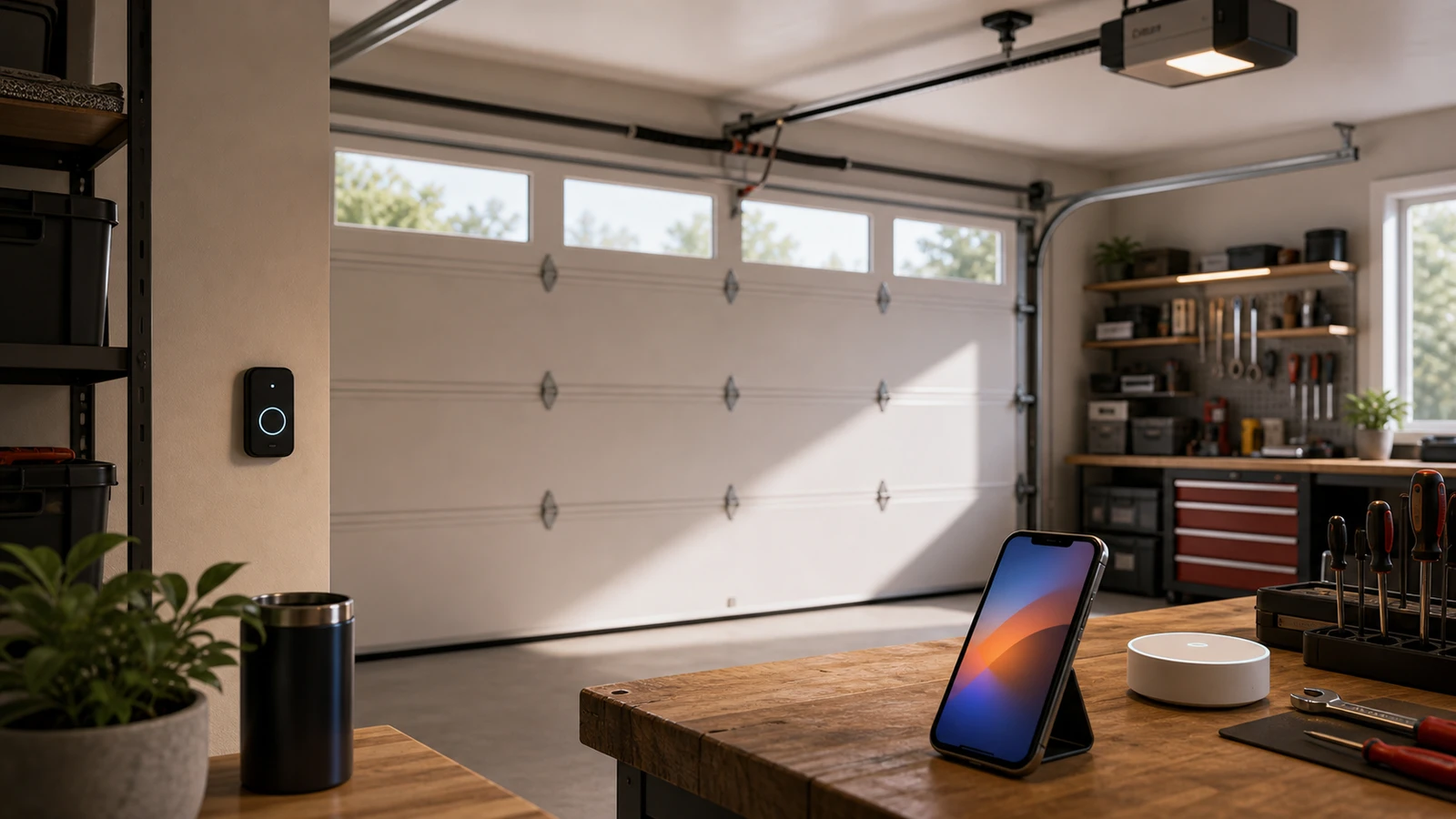
A smart garage door opener can be useful: you can check whether the door is closed, receive alerts, give temporary access, and close the door without turning around.
It can also become a large remote-controlled entry point attached to your house. Treat it as both a smart device and a physical safety system.
The features that matter
Prioritize:
- Open and close alerts.
- Door-left-open reminders.
- Activity history.
- Guest or temporary access.
- Two-factor authentication on the account.
- Clear support for your existing opener.
- A manual way to operate the door if the smart feature fails.
Avoid buying only for voice control. A garage door is not the same kind of device as a lamp.
Account security checklist
Before using remote access:
- Use a unique password.
- Turn on two-factor authentication if offered.
- Review every shared user.
- Remove old guests, contractors, and previous household members.
- Avoid sharing one master login.
- Check whether the app logs open and close events.
- Keep the opener app updated.
If the garage connects to the house, treat the account like a front-door key.
Physical safety still matters
The smart module does not replace:
- Photo-eye or obstruction sensors.
- Proper door balance.
- A working wall button.
- A clear view before closing when possible.
- Maintenance for springs, tracks, rollers, and cables.
If the door reverses unpredictably, moves unevenly, makes loud grinding sounds, or has damaged springs or cables, solve that before adding remote control.
Wi-Fi and notification setup
Garage Wi-Fi is often weak because routers are far away and garage walls are dense. Test signal strength before blaming the opener.
Use notifications that are specific enough to act on:
- Door opened.
- Door closed.
- Door left open for a set time.
- Shared user operated door.
- Device offline.
Too many alerts cause alert fatigue. Too few alerts make the smart feature less useful.
Install compatibility checks
Before buying a smart controller, confirm the opener model, wall button type, safety sensor setup, and whether the manufacturer says the smart accessory is compatible. Some openers use security or wall-control designs that do not work with every add-on module.
Also check where the tilt sensor, door-position sensor, or controller will mount. A smart controller that cannot reliably tell open from closed is worse than a simple reminder note on the door.
Access-sharing rules
Create access levels instead of sharing one login. A family member, cleaner, neighbor, contractor, or delivery service should not all receive the same permanent control path. Use temporary or scheduled access when the platform supports it, and remove access as soon as the need ends.
Review shared access after vacations, repairs, roommate changes, and moves. Garage access is easy to forget because it feels less formal than a front-door key, but it often leads directly into the home.
Voice and automation cautions
Voice close commands may be reasonable in some homes. Voice open commands deserve more caution because they turn speech, account permissions, and device placement into an entry-control path. If enabled, understand who can issue the command, whether the speaker recognizes voices, and whether the app records history.
Avoid automations that open the garage based only on location if the phone location is unreliable or several household members share a car. A false open is more serious than a missed convenience.
Maintenance routine
Test the physical door, safety sensors, app status, and alerts on a regular schedule. If the door sticks, reverses unexpectedly, or reports the wrong state, fix the mechanical or sensor problem before relying on remote control.
Sources and further reading
- CPSC: Safety Commission Publishes Final Rules For Automatic Garage Door Openers
- FTC: Securing Your Internet-Connected Devices at Home
- CISA: Securing the Internet of Things
- Related: Smart Home Guest Network Guide
Frequently asked questions
- Is a smart garage door opener a security risk?
- It can be if the account is weak, access is shared loosely, or alerts are ignored. Strong account security and careful access management reduce risk.
- Should a garage door be controlled by voice?
- Voice control may be convenient, but it deserves stricter review than a light or plug because it controls a large physical entry point.
Last updated May 12, 2026. See our editorial policy for methodology and corrections.
The Signal Brief
One useful dispatch each week.
One sharp take, three things worth reading, and the week's buying signals.