
Smart Home
Water Leak Sensor Placement Guide: Where to Put Sensors First
A practical water leak sensor guide for sinks, washing machines, water heaters, toilets, basements, alerts, shutoff valves, and maintenance.
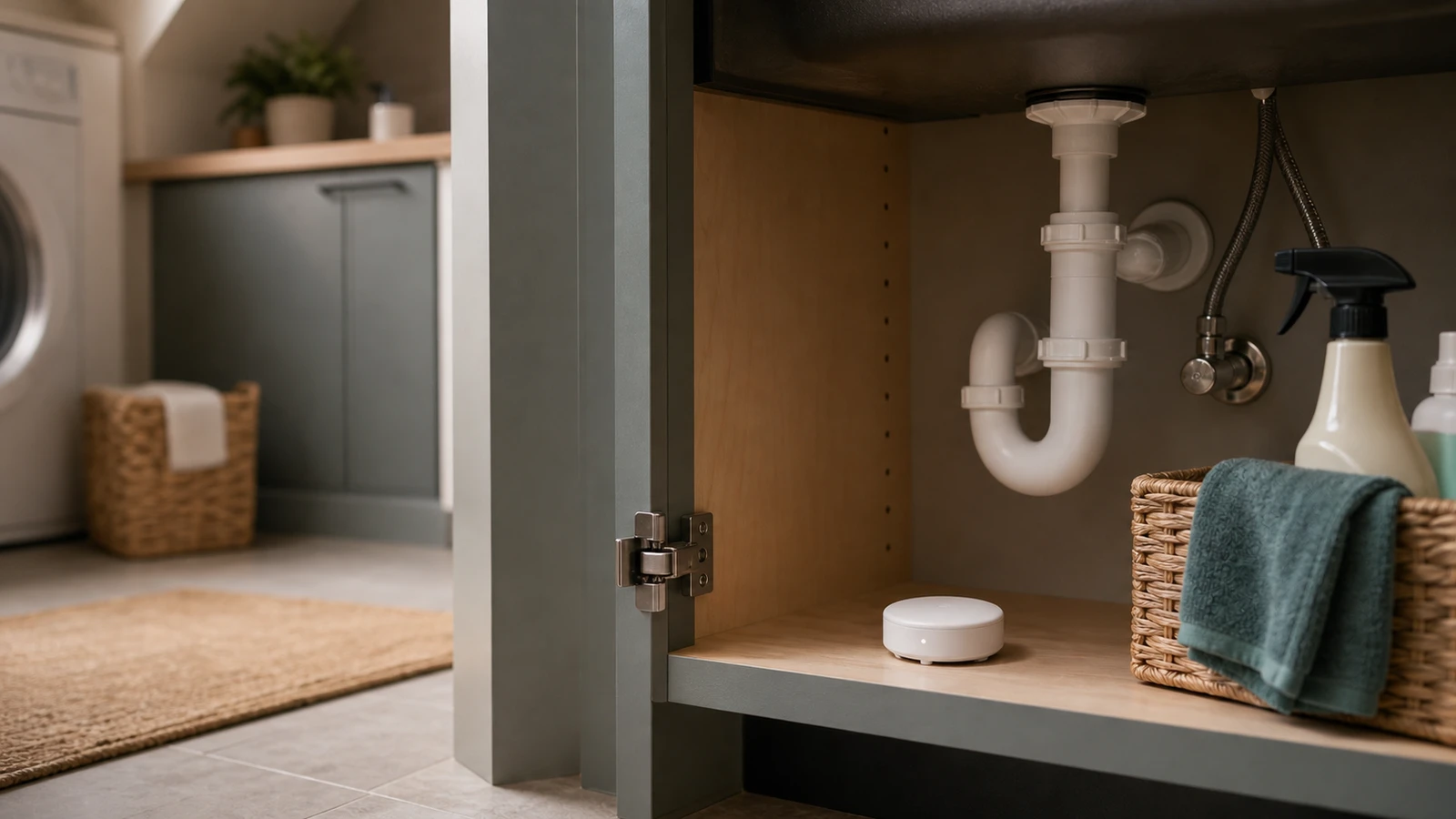
Water leak sensors are simple: they alert when water touches the sensor. The harder part is choosing the first locations. Put them where a small leak can sit unnoticed, spread behind cabinets, or damage flooring before anyone sees it.
First placements
Prioritize:
- Under bathroom sinks.
- Under the kitchen sink.
- Behind or beside the washing machine.
- Near the water heater pan or base.
- Beside toilets.
- Under or near the dishwasher.
- Basement low points.
- Near a sump pump.
Place the sensor where water would actually travel first. In a cabinet, that may be the low corner, not the center.
Alerts matter more than quantity
A leak sensor only helps if someone receives the alert and can act. Check:
- Push notifications.
- Email alerts.
- Household sharing.
- Battery warnings.
- Hub offline alerts.
- Sounder volume if the sensor has one.
- What happens when Wi-Fi is down.
If a sensor can only notify one phone that is always on silent, the setup is weak.
Flow monitors and shutoff valves
EPA WaterSense notes that leak detection or flow monitoring systems can alert to unusual water use and, in some systems, activate a shutoff valve. That is a bigger project than placing a puck sensor under a sink.
Consider whole-home monitoring when:
- You travel often.
- The home has a history of leaks.
- The water heater or plumbing is aging.
- The main shutoff is accessible and serviceable.
- You are ready for professional installation if needed.
Placement details people miss
Put the sensor where water will arrive, not where the device looks tidy. Under a sink, that may be the lowest rear corner of the cabinet. Behind a washing machine, it may be near the supply hoses or drain path. Near a water heater, follow the pan or floor slope rather than centering the sensor in open space.
If a location has a raised lip, cabinet liner, or uneven tile, test with a small amount of water on a towel or tray before trusting the placement. The goal is to understand the path, not to flood the cabinet.
Alert chain checklist
After placement, test the whole chain:
- Trigger the sensor with a damp finger or test method from the manual.
- Confirm the local sound, if it has one.
- Confirm phone notifications.
- Confirm alerts for every adult who should respond.
- Confirm low-battery warnings.
- Confirm what happens if the hub or Wi-Fi is offline.
The best sensor location is not enough if the alert goes to one silent phone or an account nobody checks.
Maintenance rhythm
Check sensors when you replace HVAC filters, test smoke alarms, or do another monthly home task. Look for dead batteries, corrosion, moved sensors, blocked drain pans, kinked hoses, and app devices that have quietly gone offline.
Also review the contact list after a move, roommate change, or phone upgrade. Leak alerts should go to people who can actually act.
When to call for help
Call qualified help for active leaks, repeated alerts, water heater issues, sump pump problems, or signs of hidden damage. A sensor tells you water is present; it does not diagnose the source or make plumbing safe.
Bottom line
Leak sensors are cheap relative to water damage, but only if they are placed, tested, and noticed. Buy fewer sensors first, put them in the highest-risk locations, confirm the alert path, and then expand once the household knows what the notification means. A tested alert is more valuable than a larger set of sensors nobody has checked.
Sources and further reading
- EPA WaterSense: Home Maintenance
- EPA WaterSense: Fix a Leak Week
- FEMA: Protect Your Home from Flooding
- Related: Smart Plug Energy Monitoring
Frequently asked questions
- How many water leak sensors do I need?
- Start with the highest-risk locations: sinks, washing machine, water heater, toilets, dishwasher, and basement low points. Add more after testing alerts.
- Can a water leak sensor stop a leak?
- A basic sensor alerts you. Some systems can trigger a shutoff valve, but that requires compatible hardware and proper installation.
Last updated May 12, 2026. See our editorial policy for methodology and corrections.
The Signal Brief
One useful dispatch each week.
One sharp take, three things worth reading, and the week's buying signals.