
Espresso
Best Budget Espresso Machines Under $300 (2026)
Real espresso under $300 is possible but limited. Five machines that actually pull good shots, plus the trade-offs of buying budget.
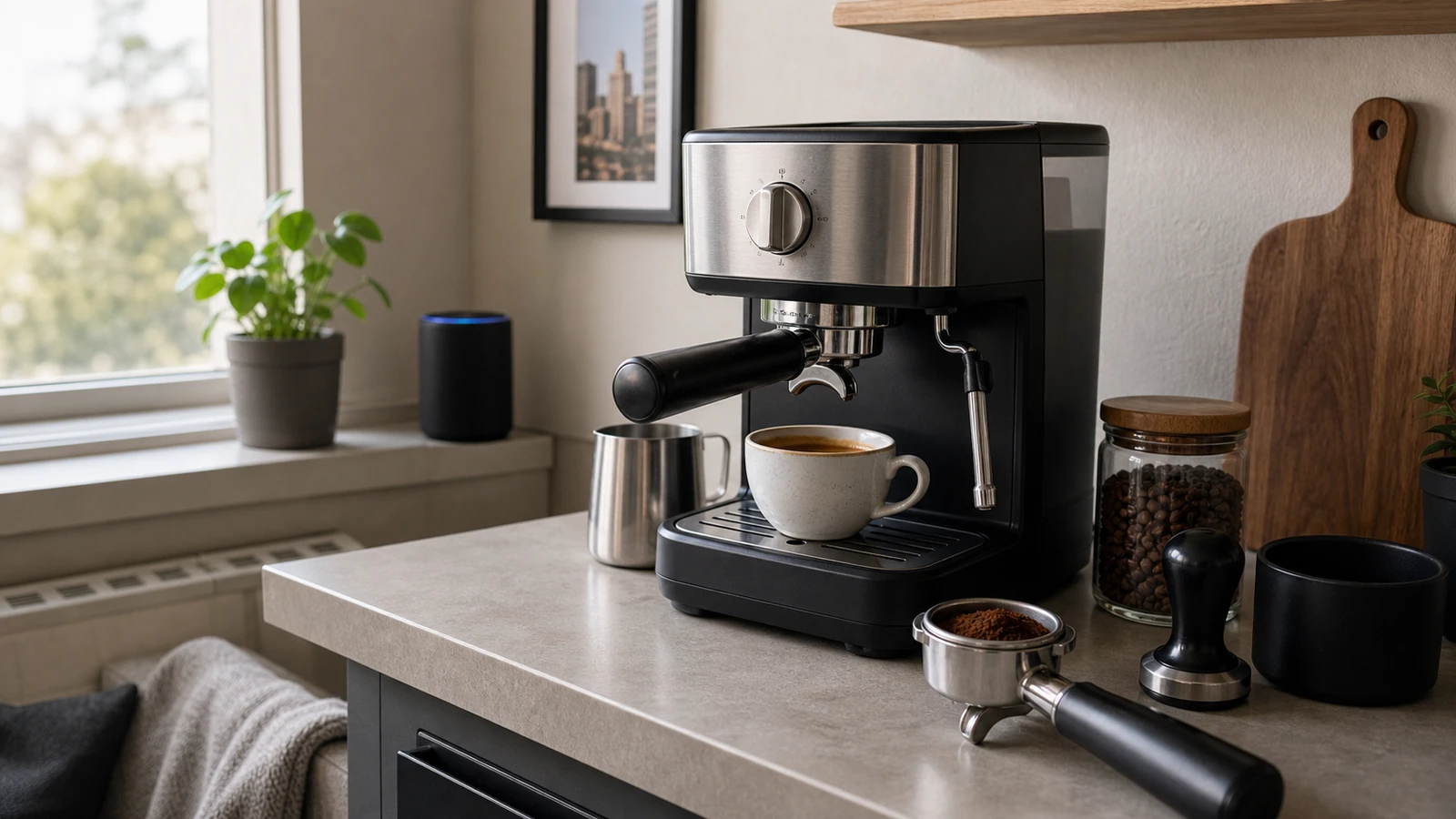
Real espresso — 9 bars of pressure, ~200°F brew temp, 25–32 second shots — used to require $800+ machines. In 2026, you can get it under $300. But the trade-offs are real: smaller boilers, slower steam wands, plastic instead of metal, and limited temperature stability.
Here are the five sub-$300 machines that actually produce espresso worth drinking — and an honest look at what you’re giving up.
What “real espresso” means at this price tier
“Real espresso” at sub-$300 means:
- 9 bars of pressure (via pump, not steam)
- 190–205°F brew temperature
- Portafilter (typically 51–58mm, often 58mm at the higher end)
- Pressurized OR non-pressurized basket options
- Milk steam wand (panarello or real wand, quality varies)
What you’re not getting at sub-$300:
- Dual boilers — you wait between brew and steam
- PID temperature control — temp swings 5–10°F
- Large water reservoirs — typically 1–1.5L
- Commercial-grade build — plastics, thermoblocks (not boilers)
- E61 group heads — simplified thermoblock heating
For a home user making 2–4 drinks per day, sub-$300 is often enough. For hosting parties or aspiring to cafe-level consistency, it won’t be.
Top 5 ranked
1. Breville Bambino Plus — best overall (~$299)
Score: 8.8 / 10
The Bambino Plus is the budget pick that feels like premium.
- 54mm portafilter (narrower than 58mm standard, but workable)
- Thermoblock heats to brew in 3 seconds (fastest in class)
- Real steam wand with automatic milk frothing (temp + texture)
- Water tank 1.5L — enough for 4–6 drinks before refill
- Compact footprint (smaller than most sub-$300 competitors)
Pros: fast, compact, looks like a mini Bambino (which is a $450 machine), auto-milk frothing is legitimately good for beginners.
Cons: 54mm (not 58mm) portafilter means accessories don’t interchange with most machines. Pressurized basket (default) masks bad grind until you replace it with a non-pressurized. Steam wand is narrow — can’t steam 12oz+ pitchers easily.
Best for: beginners and intermediate home users who want latte drinks + occasional straight espresso.
2. Gaggia Classic Evo Pro — best pure espresso (~$349–449)
Score: 8.9 / 10
The Gaggia Classic has been the “starter prosumer” machine for 30 years. The 2023 Evo Pro update adds a proper steam wand and a refined group head. Often $349 on sale, sometimes $449 retail.
- 58mm standard portafilter — all accessories interchange
- Proper brass group head with thermal mass
- Single boiler (wait between brew and steam)
- Commercial-grade steam wand (real 4-hole tip)
- Heavy, built like a tank, lasts 15+ years
Pros: the best pure espresso under $400. Real 58mm, real metal construction, real steam wand. Modifiable (PID upgrades available).
Cons: single boiler = 60-second wait between brew and steam. Small 72oz water reservoir. No auto-milk frothing. Learning curve steeper than Breville.
Best for: people who want to learn real espresso and might upgrade to a dual boiler later. Best “real machine” at the budget tier.
3. De’Longhi Stilosa — best true budget (~$99)
Score: 8.0 / 10
Yes, $99 can make real espresso. De’Longhi Stilosa is the entry point of entry points.
- 51mm portafilter (small but functional)
- Thermoblock heating (5-second preheat)
- Panarello-style steam wand (not a real wand, but foams milk)
- 1L water tank
- Manual control (you start/stop the shot)
Pros: real espresso at the price of a decent hand grinder. Beginner-friendly. Compact. De’Longhi’s been making this class for 20 years.
Cons: panarello wand makes stiff foam, not microfoam (latte art is near impossible). Thermoblock temperature swings 10°F+ during shots. 51mm portafilter is small — harder to distribute evenly. Build is plasticky — durability varies.
Best for: absolute beginners testing whether espresso is for them. Graduate to Bambino or Gaggia within a year.
4. Flair 58 (manual lever) — best no-electricity espresso (~$289)
Score: 8.7 / 10
Not everyone’s answer, but distinctive: a manual lever press that produces real 9-bar espresso without electricity.
- 58mm basket (standard)
- Manual pressure via lever (you apply the force)
- No pump, no boiler — uses your home hot water
- Temperature control via built-in heating element (58X model)
- No steam wand — pair with a milk frother pitcher
Pros: unbelievably good espresso for the price, completely portable, indestructible, no maintenance or descaling ever.
Cons: no milk steaming (you’d need a separate frother), manual effort (about 30 seconds of pulling per shot), warmup/temperature stability depends on your preparation.
Best for: espresso purists, travelers, minimalists. If you mainly drink straight espresso and want the best shot quality at the price.
5. Breville Nespresso Creatista — hybrid capsule machine (~$499)
Score: 7.5 / 10 · Price above budget but worth mentioning
If you want the convenience of pods (Nespresso capsules) plus real milk steaming, Creatista is the bridge. It’s above our $300 cap but is the best compromise for people who want consistent espresso with zero learning curve.
- Nespresso-compatible pods (no grinder needed)
- Real automatic steam wand (milk frothing on-device)
- 15 second preheat
- No learning curve
Pros: zero-skill consistent shots. No grinder needed. Great for milk drinks.
Cons: locked to Nespresso pods (can’t use fresh beans). Pods cost $0.70+ each. Environmental waste from capsules. Not “real espresso” in the specialty coffee sense — it’s pre-ground old coffee in plastic/aluminum.
Best for: household where at least one person wants cafe drinks but nobody wants to learn the craft.
What you’re giving up at sub-$300
Be honest with yourself about the trade-offs:
Steam power and milk quality
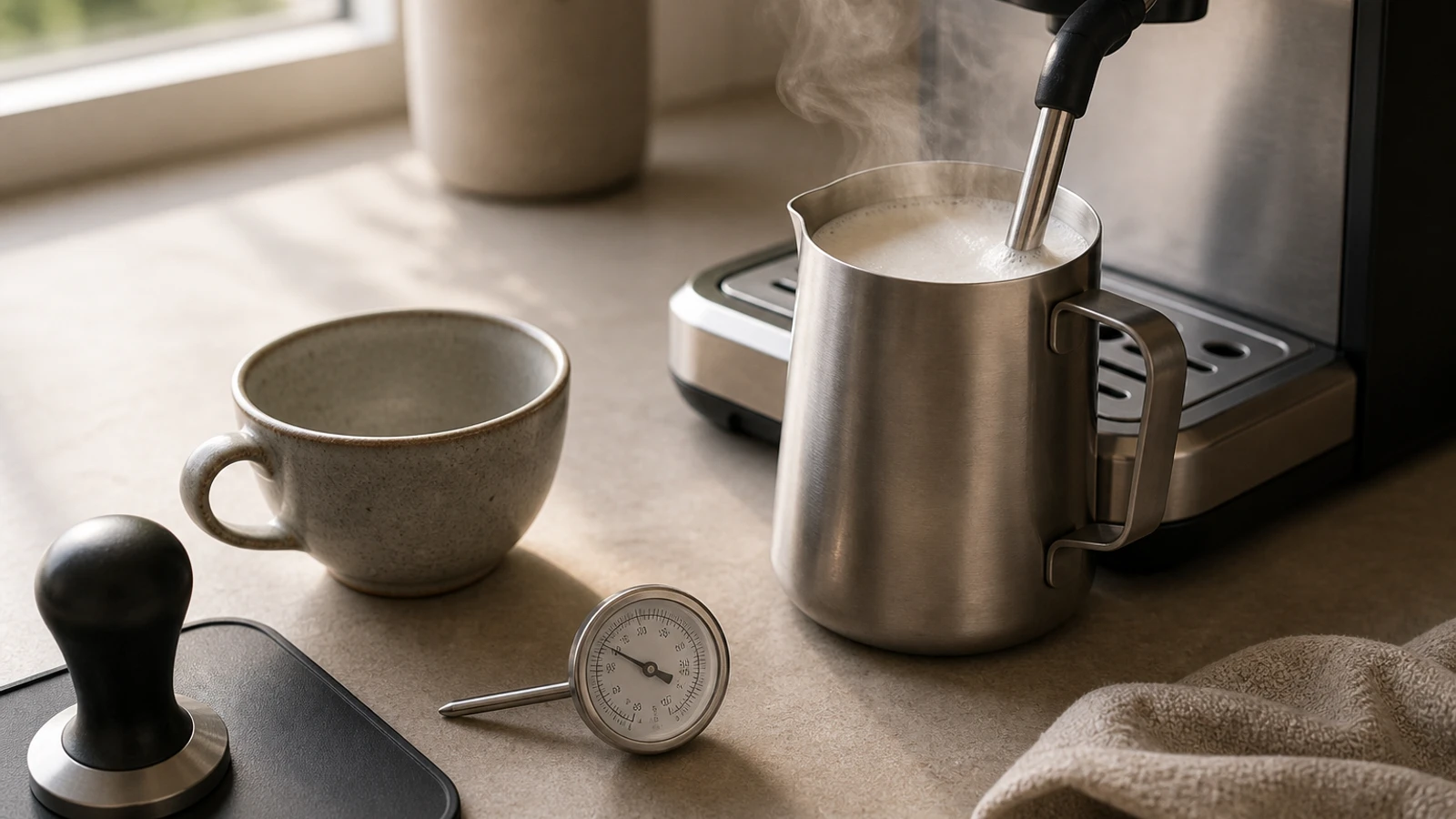
Budget machines typically deliver 3–5 bars of steam pressure; commercial machines deliver 15+. That means:
- Milk takes 30–45 seconds to steam (vs 10–15 on premium)
- Texture depends heavily on your skill (less forgiveness)
- Large pitchers (12oz+) are hard to steam
- Microfoam quality at budget requires much more practice
Temperature stability
Thermoblocks and single boilers swing 5–10°F during shots. Premium dual-boiler machines swing 1–2°F. At budget tier, shot-to-shot consistency depends more on timing and less on machine.
Build quality
Plastic internals mean 3–5 year lifespan for heavy use. Premium machines last 10–15 years. If you’re pulling 10+ shots per day, budget machines wear out faster.
Back-to-back shots
Single-boiler machines need 60+ seconds to switch from brew to steam temperature. Bambino Plus mitigates this but doesn’t eliminate it. If you’re making multiple drinks in a row, expect waiting.
The real question: machine or grinder?
If you’re budgeting $300–500 total, the answer is almost always: invest in the grinder first, get a basic machine second.
- $300 machine + $100 grinder = mediocre shots
- $150 machine + $250 grinder = significantly better shots
Fresh properly-ground coffee matters more than machine sophistication for espresso quality. A $100 grinder bottlenecks a $500 machine. A $300 grinder (like the Baratza Encore ESP) unlocks shots from even the Stilosa.
Budget setup recommendations
Ultra-budget tier (~$300 total)
- De’Longhi Stilosa ($99) + Baratza Encore ESP ($170) + fresh beans ($20)
- Or: Flair 58 ($289) + any manual grinder for straight espresso only
Mid-budget tier (~$500 total)
- Breville Bambino Plus ($299) + Baratza Encore ESP ($170) + beans ($20)
- This is the best latte setup for the price
Upgrade-budget tier (~$800 total)
- Gaggia Classic Evo Pro ($349) + Baratza Sette 270 ($299) + beans ($30)
- This is a real “entry specialty” setup — produces cafe-comparable shots
Frequently asked questions
- Can you really make good espresso under $300?
- Yes, but within limits. Budget machines produce legitimate espresso — real pressure, real temperature, real extraction. What you sacrifice is consistency, steam power, build quality, and speed. For home use making 2–4 drinks per day, under $300 is often enough.
- Bambino Plus vs Gaggia Classic Evo Pro — which is better?
- Bambino Plus for milk drinks and latte art (auto-milk frothing works). Gaggia Classic Evo Pro for pure espresso shots and learning the craft (standard 58mm, proper build). If you drink mostly lattes, Bambino. If you drink mostly straight shots and want to upgrade later, Gaggia.
- Is the De'Longhi Stilosa really worth it at $99?
- For beginners testing whether they enjoy espresso, yes. It produces real espresso at the lowest possible price. Limitations (weak steam wand, 51mm portafilter, plastic build) are real but expected. Graduate to Bambino Plus or Gaggia within a year if you stick with espresso.
- Do I need a separate grinder?
- Yes, strongly. Pre-ground coffee is stale within 30 minutes — your espresso will taste flat regardless of machine. A $150 grinder is a better upgrade than a $50 machine increase. Budget at least $150 for a grinder alongside any sub-$300 machine.
- What about Keurig or regular drip coffee makers?
- They don't produce espresso — no pressure, wrong temperature, different extraction. They make drip coffee (good) or Keurig-style pods (convenience coffee). Real espresso requires 9 bars of pressure, which only espresso machines produce.
- Will a sub-$300 machine last 10 years?
- Heavy use (5+ shots/day): 3–5 years expected. Light use (1–2 shots/day): 7–10 years. Compared to $800+ prosumer machines that last 15–20 years, budget machines are a lower-value per-year investment but lower upfront cost.
Sources and further reading
- James Hoffmann: Espresso Reviews
- Clive Coffee: Espresso Machine Buying Guide
- Home-Barista Forum: Sub-$500 Machines
- Related: Best Super-Automatic Espresso Machines · How to Make a Latte at Home · Espresso guides
Last updated April 23, 2026. See our editorial policy for methodology. Reviews based on aggregated research, spec comparisons, and community reports — not independent physical testing.
The Signal Brief
One useful dispatch each week.
One sharp take, three things worth reading, and the week's buying signals.