
Pickleball
Best Pickleball Paddles for Kids (2026)
Six junior paddles sized correctly for kids ages 6–14. Weight, grip, and length matter more than color. Here's what actually works.
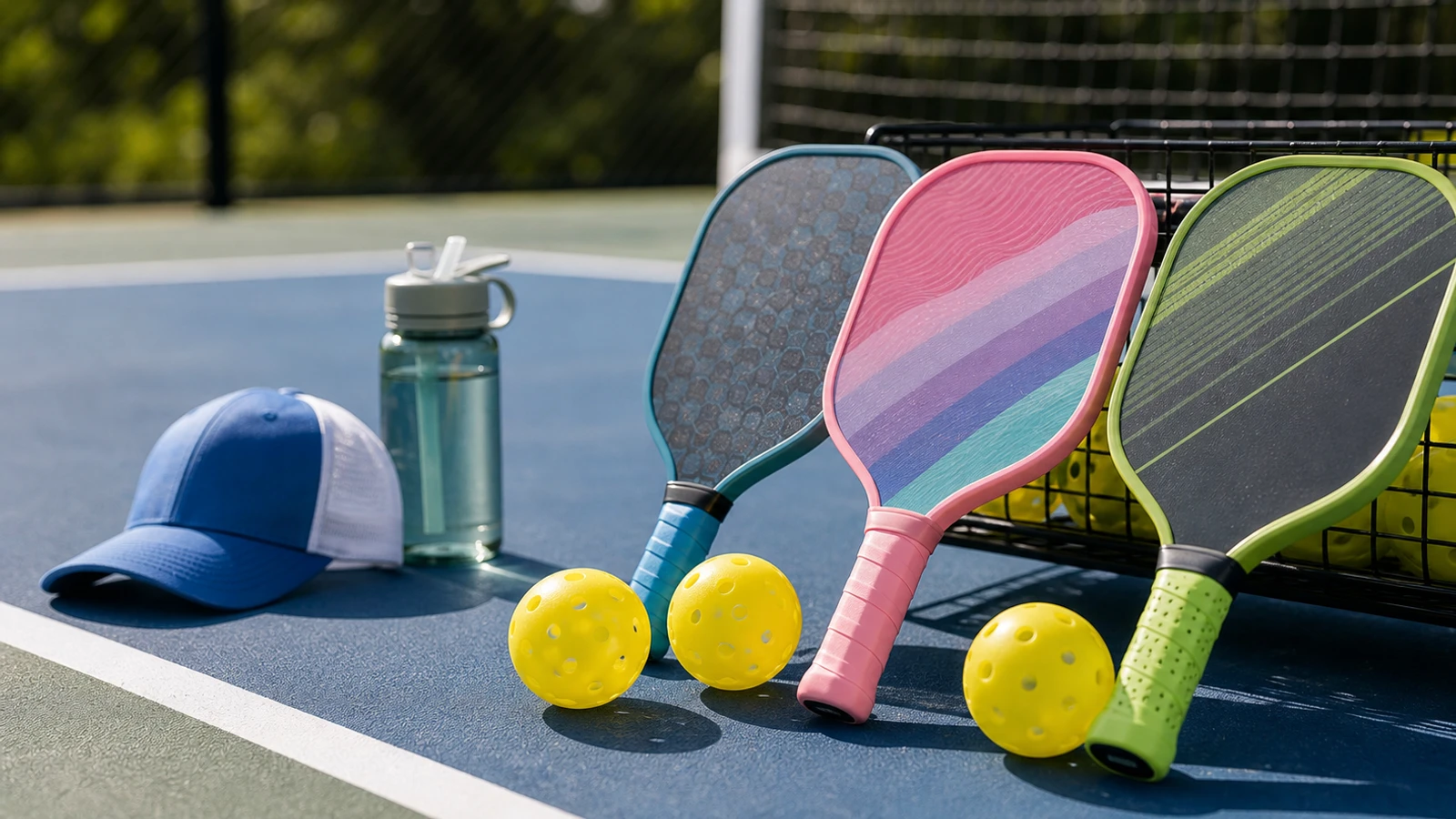
Adult pickleball paddles are not scaled-down tennis racquets — they’re already light and short. But they’re still too heavy and too long for kids under 12. A 7.8 oz adult paddle in a 9-year-old’s hand leads to two problems: (1) poor technique from the kid compensating for paddle weight, and (2) shoulder strain from swinging something heavier than the arm can handle.
The fix is a junior paddle sized to the child’s age, grip, and swing mechanics. Six paddles make the list for 2026.
What actually matters for kids
Four specs, in order of importance:
1. Weight
An adult 7.8 oz paddle feels like a 2.5-pound sledgehammer in a 9-year-old’s hand. For kids:
- Ages 4–7: 5.0–6.5 oz
- Ages 8–11: 6.5–7.2 oz
- Ages 12–14: 7.0–7.5 oz (can transition to adult paddles)
- Teens 15+: adult paddles fine
Overweight paddles cause slow, muscled swings instead of clean short strokes. Kids develop bad habits trying to compensate.
2. Grip circumference
Adult grips (4 1/4”) are too large for most hands under 12. For kids:
- Ages 4–7: 3.5” grip (toddler)
- Ages 8–11: 4” grip (smallest junior adult size)
- Ages 12–14: 4” to 4 1/8” (approaching adult)
A grip that’s too large forces the kid to grip harder, which tires their hand and puts them in a palm-grip (instead of a handshake/continental grip). That’s a technique problem they’ll spend years unlearning.
3. Length
Full adult paddles are 15.5–16.5” long. For kids:
- Ages 4–7: 14–14.5” junior paddles
- Ages 8–11: 14.5–15” slightly shorter than adult
- Ages 12+: 15.5–16” standard length
Shorter paddles are easier to control for kids whose arm length doesn’t match adult swing geometry.
4. Core and face
Most junior paddles use polymer honeycomb cores (the standard for beginner adult paddles too). Face materials are usually composite or fiberglass — softer than premium carbon fiber, which is actually better for kids because it’s more forgiving.
Don’t buy a kid a carbon-fiber thermoformed paddle. The pop is wasted on them, and the stiff construction makes off-center hits painful.
Top picks by age group
Ages 4–7
Oneshot Juniorshot — best for toddlers/small kids
Price: ~$40
The Juniorshot is sized for very young players: 14” length, 6 oz weight, 3.5” toddler grip. The face is cushioned fiberglass — soft enough that off-center hits don’t hurt. Paddle shape is wide for a larger sweet spot.
This is the paddle to buy if you’re introducing a 5-year-old to pickleball at a family rec session. It won’t last as the kid grows, but it’s the right paddle for the introduction.
Ages 8–11
Baddle Junior — best for the 8–11 age band
Price: ~$60
The Baddle Junior is the best-designed paddle for the specific 8–11 age band. 14.75” length, 7 oz weight, 4” grip, polymer honeycomb core. Proportioned so a 9-year-old’s swing geometry works naturally.
Build quality is solid — expect 2–3 seasons of use before the kid outgrows it. Paddle face is composite, which produces enough pop for rec play but forgives mishits.
Franklin Sports Youth Polymer Paddle — best overall for kids
Price: ~$40
Widely available (most sporting goods stores stock it), 7 oz weight, 4” grip, 15” length — works for the 7–12 age range with some overlap. Polymer honeycomb core, composite face, USAPA approved.
This is the default recommendation: available everywhere, right specs for a wide age range, priced reasonably, and durable enough for elementary-school-through-middle-school use.
Ages 12+
By age 12, most kids can use a light adult paddle (7.3–7.5 oz, 4” grip). The specific picks from our women’s paddle list work well — Selkirk SLK Halo Control, Gamma Voltage 2.0, Vatic Pro PRISM Flash.
Selkirk Student Paddle — best transition to adult
Price: ~$75
Selkirk’s student/youth line bridges the gap between junior and adult paddles. 15.25” length, 7.2 oz weight, 4” grip — right at the transition point for a 12–14 year old starting to play competitively.
Polymer core and graphite face — the graphite face is a step up in bite from fiberglass, helping serious kids develop spin technique.
Best budget for beginners
Franklin X-Force Pickleball Set — best for introducing kids
Price: ~$25–30 for 2 paddles + 2 balls
For parents introducing pickleball to their kids, the full adult “set” products work — except these Franklin X-Force sets specifically include paddles in the 7 oz range with 4” grips, making them actually usable for kids 9+.
Under $30 total, you get two paddles and two balls. Perfect for testing whether your kid is going to stick with pickleball before investing in a proper junior paddle.
Spec comparison
| Paddle | Weight | Core | Handle | Shape | Price | Score |
|---|---|---|---|---|---|---|
| Oneshot Juniorshot | 6.0 oz | Fiberglass | 3.5" | Widebody short | $40 | Ages 4–7 |
| Franklin Youth Polymer | 7.0 oz | Polymer honeycomb | 4.0" | Standard junior | $40 | Ages 7–12 |
| Baddle Junior | 7.0 oz | Polymer honeycomb | 4.0" | Hybrid junior | $60 | Ages 8–11 |
| Selkirk Student | 7.2 oz | Polymer + graphite face | 4.0" | Transition adult | $75 | Ages 12–14 |
| Franklin X-Force Set (2 paddles + balls) | 7.0 oz each | Polymer | 4.0" | Standard | $25–30 total | Ages 9+ intro |
Progression: when to upgrade
Replace your kid’s paddle when:
- They’ve outgrown the weight. The paddle feels too light (common once a kid hits growth spurts around ages 11–13).
- They’ve outgrown the grip. Their grip size has increased; they complain the handle is too small.
- They’ve outgrown the skill level. The paddle has reached its ceiling — usually around 3.0 DUPR for most junior paddles.
Don’t over-upgrade. A 10-year-old doesn’t need a $200 paddle any more than they need a $200 tennis racquet.
Safety considerations
Pickleball is generally safe for kids, but three things to note:
-
Ball speed. Kids in fast rec games with adults can face 40+ mph pickleballs. Make sure kids are playing against age-appropriate partners or at reduced pace with adults.
-
Eye protection. Young kids (under 10) who are learning positioning should wear sports goggles. Pickleballs can bounce unpredictably and cause eye injuries.
-
Court surface. Concrete outdoor courts are harder on falling kids than gym floors. Kneepads aren’t necessary, but teach kids to roll/absorb falls rather than catching themselves on stiff arms.
Getting kids to actually play
The paddle matters less than the environment. Three things that work:
- Play with them, don’t just watch. Kids pick up pickleball faster when a parent is rallying with them.
- Play to 7 instead of 11. Shorter games keep attention spans engaged and let kids win/lose faster.
- Use smaller court areas. Play kitchen-only rallies on full-size courts until they can reach the baseline with a paddle swing.
Frequently asked questions
- What size pickleball paddle should I buy for my child?
- For ages 4–7: a 14" paddle, 6 oz weight, 3.5" grip. For ages 8–11: a 14.5–15" paddle, 7 oz, 4" grip. For ages 12+: a light adult paddle, 7.2–7.5 oz, 4" grip. The Franklin Youth Polymer Paddle is a good default for the 7–12 age range because it spans multiple growth phases.
- Can a kid use a regular adult pickleball paddle?
- Teenagers 13+ generally can. Younger kids cannot — adult paddles are too heavy (7.8+ oz), too long (15.5–16.5"), and have grips too thick (4 1/4") for smaller hands. Forcing an adult paddle on a 9-year-old creates bad technique habits that take years to unlearn.
- Are pickleball paddle sets good for beginners and kids?
- Good for introducing the game cheaply. Franklin and Onix both sell 2-paddle + 2-ball sets for $25–$40 that work for kids over 9. Just don't expect a kid who sticks with pickleball to keep using the set paddle — they'll outgrow it in skill and grip by the end of the first year.
- How long will my kid use the same paddle?
- For most kids, 1–2 years before a size or skill upgrade. Younger kids (under 10) grow faster, so the sizing outgrows quickly. Older kids (12+) might stay on one paddle for 2–3 years if they're not playing competitively.
- Should my child wear eye protection for pickleball?
- Recommended for kids under 10, especially in mixed-age rec play where adults may hit fast balls. Sports goggles (available at any sporting goods store for $15–$25) protect against errant balls. USA Pickleball's youth programs often require eye protection in competitive play.
- What age can kids start playing pickleball?
- Most kids can start around age 5–6 with proper sizing. Hand-eye coordination improves rapidly between 6 and 8, which is the sweet spot for beginners. Competitive junior leagues typically start at age 8; USA Pickleball sanctions youth tournaments from age 8 upward.
Sources and further reading
- Nettie: Youth Paddle Size Guide Ages 6–12
- Dink USA: How to Choose Paddles for Kids
- JustPaddles: Best Paddles for Kids
- Baddle: Differences Between Adult and Junior Paddles
- Pickleball Court Co: Youth Programs
- Related: Paddle Grip Size Guide · Best Paddles for Women
Last updated May 13, 2026.
The Signal Brief
One useful dispatch each week.
One sharp take, three things worth reading, and the week's buying signals.