
Pickleball
Drop Serve vs Volley Serve: Which to Use in 2026
The drop serve is easier to hit legally but gives up pace. The volley serve is harder to master but more aggressive. Here's when each one wins.
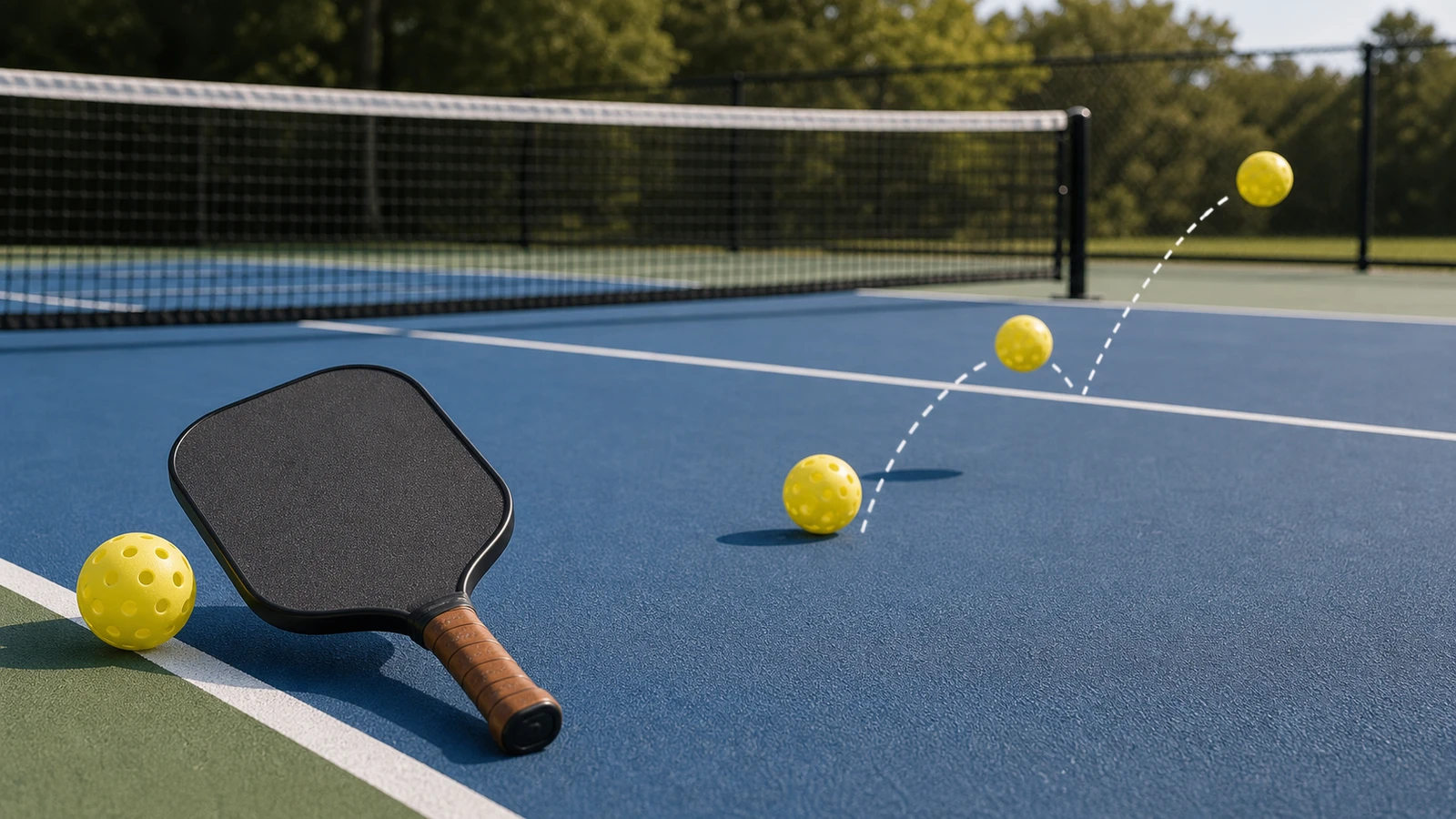
Every pickleball player chooses between two legal serves: the traditional volley serve (strike the ball out of the air before it bounces) and the drop serve (release the ball, let it bounce, then strike it). Both are legal in 2026. Neither is universally better. The right choice depends on your skill level, your technique under pressure, and what you’re trying to do to your opponent.
The two serves in one minute
Volley serve (traditional)
You toss the ball in the air and strike it before it bounces. The classic underhand serve most players learn first.
Rule requirements (all three must be met):
- Paddle contacts the ball clearly below the waist
- Paddle head clearly below the wrist at contact
- Serving arm moving in a clear upward arc
Any borderline compliance is now a fault under the 2026 rulebook.
Drop serve
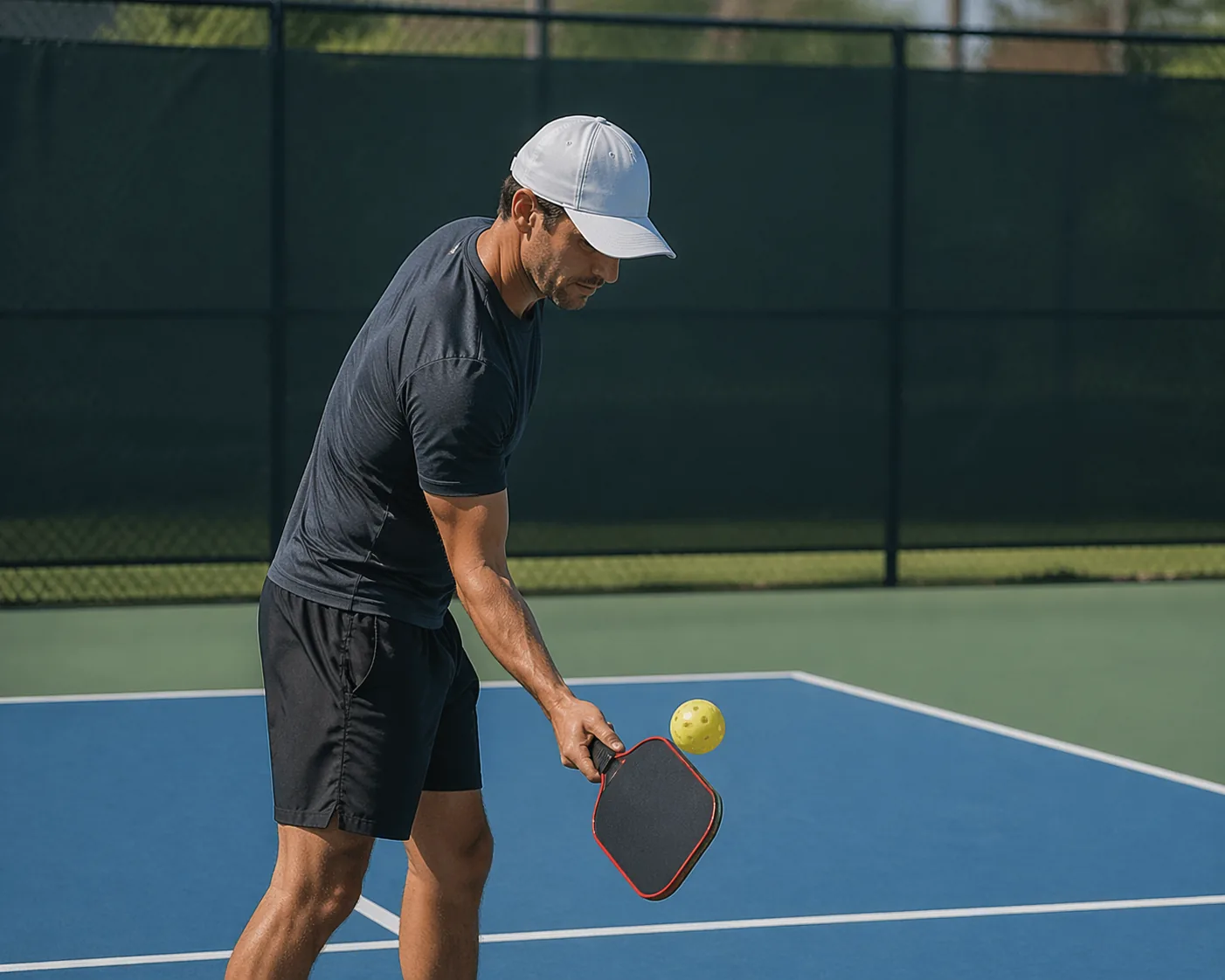
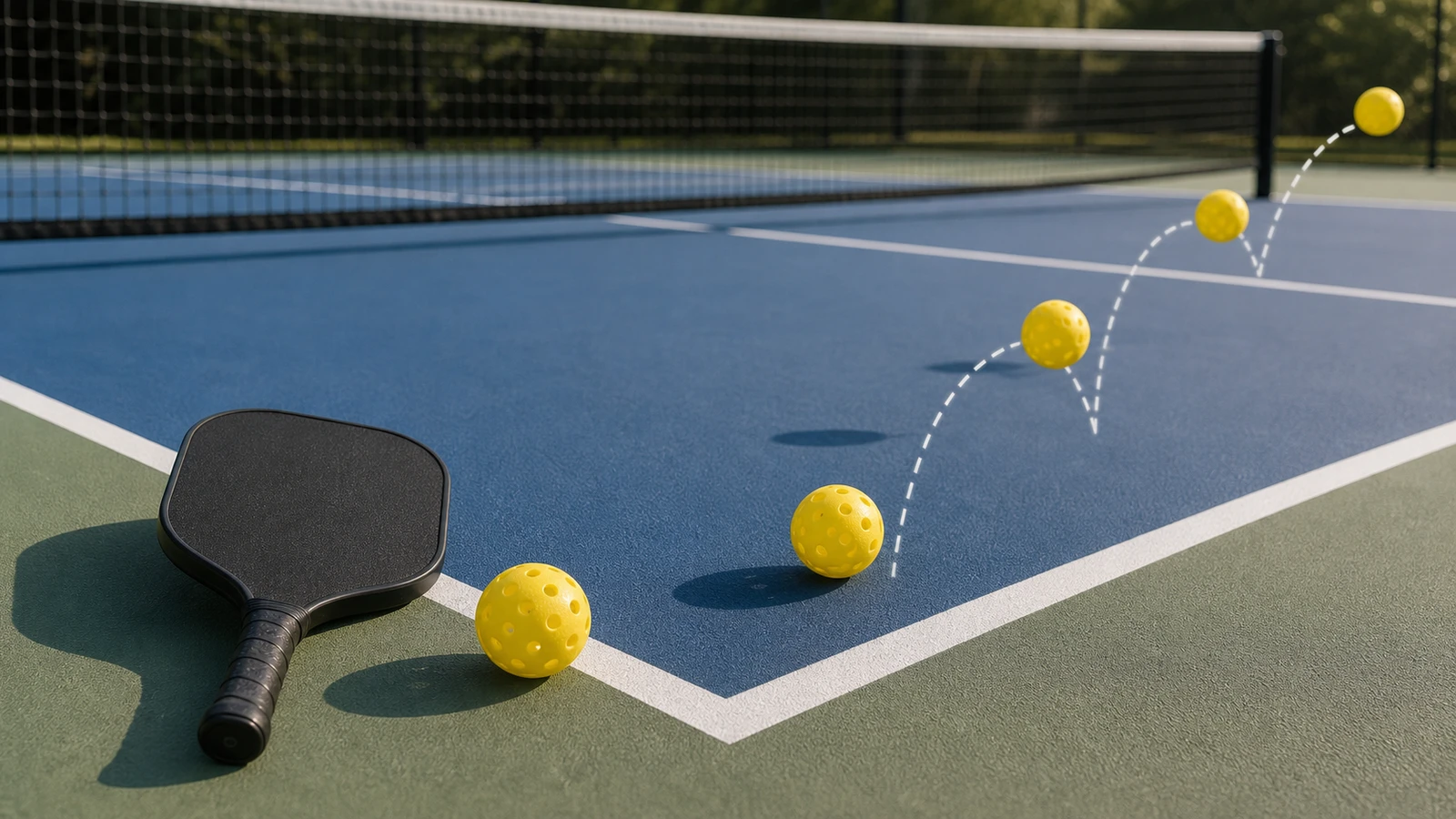
You release the ball (no tossing motion, no spin), let it bounce on the ground, then strike it after the bounce.
Rule requirements (simpler):
- Ball must be released without added spin, throw, or upward push — a genuine drop from a stationary hand
- Strike must happen after the first bounce
- Standard serving area foot rules still apply
None of the volley serve mechanics (waist, wrist, arc) apply.
When the drop serve wins
1. When you’re new to pickleball
The single easiest way to reduce service faults for a beginner is switching to the drop serve. Most service faults at 2.5–3.0 DUPR are mechanical (paddle head drifted up, wrist cocked, arm path wrong). The drop serve has none of those requirements.
Trade: the drop serve gives up 10–20% pace. At 2.5–3.0 level, pace rarely wins points anyway — consistency does.
2. Under tournament pressure
Even strong players choose the drop serve on pressure points (game-point down, side-out after a long rally). The mental load of executing the three volley-serve rules increases under stress; the drop serve is one instruction instead of three.
3. On unfamiliar or challenging courts
Indoor courts, courts with unusual lighting, courts in cold weather — any environment that changes your visual timing cues. The drop serve’s extra half-second of setup stabilizes your serve when other variables are off.
4. When you want consistent spin
Counterintuitively, the drop serve is easier to put topspin on reliably. You’re striking a slower-moving ball (just after the bounce apex), which gives your paddle more time to shape the shot. Advanced players who hit heavy topspin serves often prefer the drop serve for consistency.
When the volley serve wins
1. When you’re competitive and need pace
The volley serve generates more speed. A 45 mph drop serve is hard work. A 45 mph volley serve is standard. At 4.0+ play, serve pace forces opponents into reactive returns — a tactical advantage the drop serve sacrifices.
2. When you’ve drilled the three rules into muscle memory
Once the volley-serve mechanics are automatic, they’re not a cognitive load. You get the extra pace without the consistency penalty. This takes 3–6 months of deliberate practice for most players.
3. When your opponents are reading your drop serve
Drop serves have a very consistent arc and pace. Once an opponent has faced 10–15 of yours, they’ve grooved a return. The volley serve allows more variation (kick serve, slice, body serve) to keep opponents guessing.
4. For serve-and-attack tactics
Aggressive players use the volley serve to force a weak return, then attack the third shot. The drop serve rarely produces weak enough returns for this sequence to work.
How to choose your primary serve
| Situation | Primary serve |
|---|---|
| DUPR under 3.0, learning the game | Drop serve |
| DUPR 3.0–3.5, rec play | Drop serve OR volley (whichever is more consistent that day) |
| DUPR 3.5–4.0, tournament-oriented | Volley serve as primary, drop as pressure backup |
| DUPR 4.0+, competitive | Volley serve primary; drop serve for variety and pressure |
| Any level, chronic service faults | Drop serve until mechanics are drilled |
Having both serves is objectively better than mastering one. Even players who use volley serve 95% of the time benefit from having a drop-serve backup for pressure moments.
Common questions about the drop serve
Can I step into the drop serve?
Standard foot rules apply. At least one foot must be in contact with the surface behind the baseline at the moment of strike. You can walk up to the baseline, plant, release, and strike. You can’t be in the air when you contact the ball.
How high can I drop the ball?
No maximum height in the current rules. Practically, dropping from waist height or lower gives you more consistent timing. Higher drops create more bounce but also more timing variance.
Can I spin the ball on the drop?
You cannot add spin to the ball before release. Once it’s bouncing, you can hit it with any spin your paddle can generate. Common violation: the player’s hand twists as they release, imparting rotation. Release with a completely relaxed hand.
Does the drop serve count as a let if the ball rolls?
No. Once you release the ball, your drop is committed. If the ball rolls in an unexpected direction, you still have to hit it (or commit a fault by failing to strike).
2026 rule changes affecting both serves
The rulebook language was reorganized for 2026, but mechanics are unchanged on both serves. The biggest practical change is the added word “clearly” in the volley serve rules — referees now have explicit authority to fault borderline compliance.
The drop serve is not affected by the “clearly” change because none of the affected requirements (waist, wrist, arc) apply to drop serves. That’s another reason the drop serve gets more popular each year: the legal margin is wider.
For the full 2026 rule changes, see our 2026 pickleball serve rule changes explainer.
Frequently asked questions
- Is the drop serve still legal in 2026?
- Yes. The drop serve remains fully legal with no new restrictions. It was introduced as an experimental rule in 2020, made permanent in 2022, and carries through 2026 unchanged.
- Which serve is better for beginners?
- Drop serve. It has fewer mechanical requirements (no waist/wrist/arc rules apply), making it dramatically easier to execute legally. Beginners trying to learn three simultaneous mechanical constraints on the volley serve often develop bad habits that become hard to unlearn later.
- Do pros use the drop serve?
- Some pros use it as a primary serve; most use it as a pressure-point backup. The volley serve generates more pace and allows more serve variety, which matters at the pro level. But the drop serve's legal reliability makes it a staple in most pros' toolkits.
- Can I spin the ball on a drop serve?
- You can apply spin with the paddle at contact. You cannot spin the ball during the release. The ball must leave your hand cleanly, bounce, and then be struck. Any rotation applied before release is a fault.
- Which serve generates more power?
- The volley serve, typically 10–20% more pace at equivalent effort levels. The volley serve gets maximum power transfer from the player's shoulder, hip, and leg drive through the swing. The drop serve's pace is capped by the lower contact point and the consistency-first swing mechanic.
- Is the kick serve easier with drop serve or volley serve?
- Drop serve is more reliable for heavy topspin (kick). The bounce gives you a slower ball to shape, which makes consistent topspin easier. Advanced players who specialize in kick serves often prefer drop serves for this reason.
Sources and further reading
- Better Pickleball: 2026 Serve Rules
- USA Pickleball Official Rulebook
- The Dink: Rules Explained
- Related: 2026 Serve Rule Changes · Best Paddle for Spin (coming soon) · DUPR Skill Chart
Last updated May 7, 2026.
The Signal Brief
One useful dispatch each week.
One sharp take, three things worth reading, and the week's buying signals.